

By Rima Majumdar and Huda Jafri
Few things define a company’s identity more powerfully than its logo. A well-crafted device mark is not just a splash of colour or a geometric shape- it serves as a symbol of trust, reputation, and market presence. In today’s global economy, where businesses vie for attention in crowded digital and physical spaces, even subtle overlaps in branding can ignite legal battles with far-reaching consequences.
This truth is vividly illustrated by the ongoing clash between Cognizant Technology Solutions, one of the world’s most recognizable IT service giants, and Atyati Technologies, a homegrown Indian fintech player. What might appear to the layperson as a dispute over two hexagonal designs has snowballed into a high-stakes litigation spanning injunctions, allegations of suppression, and a rare intervention by the Hon’ble Supreme Court of India. At its heart lies a deceptively simple question: when do two logos cross the line from mere resemblance to actionable infringement?
The Cognizant-Atyati dispute has captured attention not only because of the corporate profiles involved but also because it embodies many of the tensions in India’s evolving intellectual property landscape: the battle between global and local brands, the thin line between inspiration and imitation, and the judiciary’s delicate task of balancing rights, remedies, and procedural fairness. It is a case study in how device marks, once confined to the margins of trademark law, now stand at the center of billion-dollar branding strategies- and why courts are increasingly called upon to play referee in this high-visibility arena.
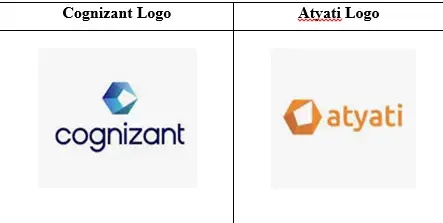
Factual Matrix
The dispute arose when Atyati alleged that Cognizant’s hexagonal “C” device mark bore a striking resemblance to its own logo, both in geometric design and overall visual impression. Atyati contended that such resemblance was likely to mislead consumers into believing an association between the two entities, especially given the overlapping spheres of technology and financial services.
Atyati claimed to have discovered Cognizant’s logo in October 2023 and subsequently filed a civil suit for trademark infringement, copyright infringement, and passing off before the Hon’ble Bombay High Court in March 2024.
Detailed Timeline and Procedural History
- Ex-Parte Interim Injunction (March 19, 2024) The suit was initially filed without serving an advance notice to Cognizant as Atyati sought an ex-parte ad-interim injunction contending that Cognizant’s continued use of the C Hexagon logo would cause irreparable loss, consumer confusion, and dilution of Atyati’s distinctive identity.The Ld. Single Judge of the High Court granted an ex-parte ad-interim injunction, restraining Cognizant from infringing the copyright of the Plaintiff’s ATYATI device mark and from using the impugned mark / logo in any manner whatsoever in relating to the impugned services until the next date of hearing i.e. April 30, 2024.
- Challenge by Cognizant and Vacation of Injunction (June 2024)Cognizant challenged the ex-parte order of the Single Judge and sought it vacation, mainly on the ground that Atyati had obtained the injunction through suppression of material facts.Cognizant’s Contentions:
- No urgency was shown by the Plaintiff (Atyati) for grant of an ex-parte ad-interim injunction: At the least, the Court ought to have issued notice to Cognizant and allowed it an opportunity to file its reply, and thereafter hear the parties on merits.
- Difference in the two logos: A perusal of the two marks as shown in the plaint would reveal that Plaintiff’s logo is not a “C”, while the Defendants’ logo is a “C” as the name of the Defendants starts with a “C”.
- Misrepresentation of facts by Plaintiff: The date of knowledge of Defendant’s adoption of the suit trademark was 2022 as this was what was claimed in the legal notice sent by Atyati to Cognizant prior to filing the suit, but the suit plaint stated the date of adoption by the Defendant to be in October 2023. Basis this misrepresentation, the Court granted the ex-parte order. Had the Court been informed of the 2022 adoption, it would have issued notice to the Defendant to respond to the claims.
- Prior Public Use:
Cognizant asserted that its hexagonal “C” logo has been publicly adopted as part of a global rebranding exercise in March 2022, over a year before the suit was filed. The logo had been extensively displayed on Cognizant’s LinkedIn, Facebook, and other corporate platforms. - Trademark Filings and Disclosure:
Cognizant submitted that it had filed trademark applications in the United States (April 2022) and India (published in the Trademark Journal in March 2023). These were publicly accessible, and Atyati, being a market participant in the same sector, ought to have been aware of them. - Suppression of Material Facts:
Cognizant alleged that Atyati failed to disclose:- The existence of caveats filed by Cognizant in the Bengaluru and Chennai courts in anticipation of litigation; and
- The absence of genuine urgency, given the logo’s prolonged and open use.
- Balance of Convenience:
Cognizant argued that an injunction would cause disproportionate harm, as it would disrupt its global branding operations, whereas Atyati’s alleged harm was speculative.
Atyati’s Counter-Arguments:
- Prior Adoption (2019):
Atyati maintained that it had been using its orange hexagonal device mark since 2019 and had built considerable goodwill in the fintech and digital banking sectors. - Likelihood of Confusion:
Atyati argued that the structural similarity between the two logos could cause confusion among consumers, particularly given the overlapping target audience within the financial technology ecosystem. - Good Faith:
The company submitted that any alleged non-disclosure was inadvertent, asserting that it had acted in good faith to safeguard its intellectual property rights.
Findings of the Hon’ble Single Judge (June 2024):
The Ld. Single Judge basis the aforesaid submissions, vacated the ex-parte stay , holding that:- Atyati had suppressed crucial information regarding Cognizant’s prior use and trademark filings;
- The alleged urgency was artificially created, as the impugned logo had been in public use for over a year; and
- Ex-parte injunctions are extraordinary remedies requiring strict adherence to the duty of full and fair disclosure.
The Hon’ble Court concluded that Atyati’s conduct was inconsistent with the equitable standards expected from a party seeking interim relief.
- Division Bench Appeal (August 2025)Aggrieved by the vacation of the ex-parte injunction, Atyati filed an appeal before the Division Bench of the Bombay High Court, which restored the ex-parte stay and made it operational during the pendency of the Interim injunction application, basis the following reasons:
- The question of Atyati’s knowledge of Cognizant’s 2022 rebranding was a disputed fact that could not be conclusively determined at the interim stage;
- The balance of convenience favoured Atyati, since continued use of the mark by Cognizant might cause irreversible brand confusion; and
- The Single Judge had overemphasized procedural omissions without adequately assessing the likelihood of trademark similarity.
The Division Bench did however direct the Single Judge to expeditiously dispose off the hearing of the interim injunction application.
Cognizant subsequently filed a Special Leave Petition (SLP) before the Hon’ble Supreme Court of India challenging the Division Bench’s order.
Hon’ble Supreme Court of India (September 2025)
The Hon’ble Supreme Court granted leave to Cognizant, and set aside the Division Bench’s decision on the ground that the case at hand did not meet the requirements for grant of an ex-parte injunction which per settled law is to be granted only in egregious cases.
Conclusion
While the interim injunction application of Atyati remains pending before the Bombay High Court, the findings that culminate from the aforesaid proceedings reaffirms the age-old requirement that Courts should be circumspect when granting ex-parte ad-interim injunction to parties.
How in criminal matters, bail is the rule and jail is the exception, in civil cases, notice is the rule and (ex-parte) injunction is the exception. Unless a party is able to demonstrate that the lack of an ex parte injunction would cause irreparable losses or cause the reliefs sought by a plaintiff to become infructuous, Courts should generally avoid granting the same.