

By Priyanka Sukhija and Pallavi Paul
Introduction
The Delhi High Court delivered a significant order in Britannia Industries Ltd against Shri Swastik Organics & Ors.[1], granting an injunction in favor of Britania Industries Ltd for alleged infringement of Britannia’s iconic ‘Little Hearts’ biscuits, a brand that has been part of India’s snacking culture since 1993.
Background of the Case
Britannia, one of India’s largest food companies, adopted the mark ‘Little Hearts’ in 1988 and launched its distinctive sugar-coated, heart-shaped biscuits in 1993.
In December 2025, Britannia discovered biscuits were being offered for sale on the platform Amazon under the identical name ‘Little Hearts’. The infringing products not only adopted the identical mark but also slavishly imitated Britannia’s distinctive heart shaped design and its unique red and gold packaging. The sellers further referred to ‘Britannia Little Hearts’ in the product descriptions and unlawfully used Britannia’s copyrighted images.
| Britannia’s product | Infringing Product |
|---|---|
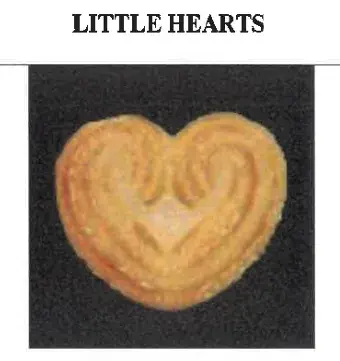 |
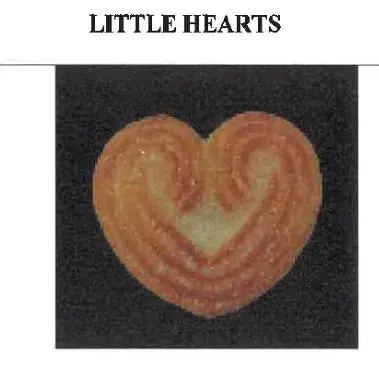 |
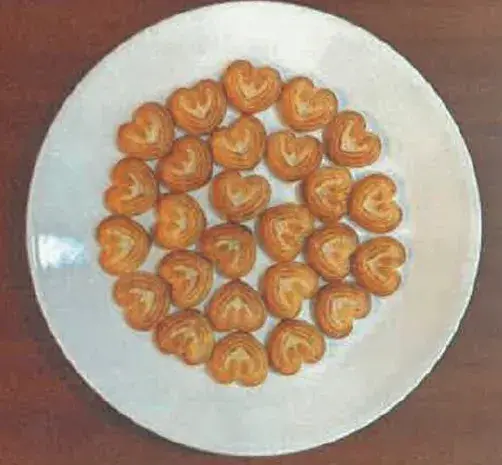 |
 |
(Images taken from Court Order)
Britannia is the registered proprietor of several trademarks in India comprising the mark ‘LITTLE HEARTS’ along with its distinctive packaging and trade dress, including inter alia, the ‘Little Hearts 3-D trademark 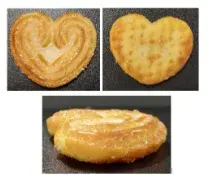 in Class 30.
Court’s Findings
Despite advance notice service on defendants, none appeared before the Court.
Comparison of Marks: The Court examined Britannia’s registered marks and the defendants’ products and found that the word mark ‘Little Hearts’, the 3-D shape of the biscuits was identical, and packaging and trade dress of the product were substantially similar.
Triple Identity Test: The Court noted that the case involved triple identity i.e., identical marks, identical products and identical trade channels/consumer base. This test made consumer confusion inevitable, especially for an average consumer with imperfect recollection.
Dishonest Adoption and Mala fide Intent: The Court highlighted that the defendants’ listing on Amazon explicitly referred to ‘Britannia Little Hearts’ and reproduced Britannia’s copyrighted product images which amounted to admission of Britannia’s prior rights and deliberate misrepresentation to mislead consumers. The Court concluded that the defendants’ acted with mala fide intent to ride on Britannia’s goodwill and reputation.
Likelihood of Confusion: Applying the test of the average consumer of imperfect recollection, the Court held that the defendant’s products were likely to be mistaken as those of Britannia’s. This confusion would cause irreparable harm to Britannia’s reputation and dilute its brand identity and lead to commercial loss.
Balance of Convenience: The Court found the balance of convenience in favor of Britannia and without an injunction being granted at this stage, Britannia would suffer irreparable harm/injury.
The Court granted an interim injunction and restrained the defendants from manufacturing, selling, marketing, or advertising biscuits under the impugned mark/shape ‘Little Hearts/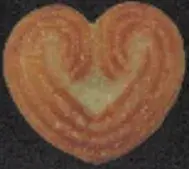 ’ or any deceptively similar variant. Further, the Court directed Amazon to delist and takedown all the infringing products.
Author’s Comments
This ruling underscores that established brands with long-standing use are entitled to robust protection against dishonest adoption. It demonstrates the Courts willingness to act swiftly to prevent consumer confusion and safeguard business reputation.
In essence, the ruling strengthens enforcement of intellectual property rights in India, especially in the fast-moving consumer goods (FMCG) sector, and serves as a warning to counterfeiters that imitation of well-known mark will invite strict judicial intervention.
Importantly, this ruling marks as a significant development in the evolving jurisprudence of shape marks in India. By recognizing Britannia’s 3D heart-shaped biscuit as a protectable trademark and restraining the defendants from copying it, the Court reaffirmed that distinctive product shapes can function as powerful brand identifiers, deserving protection equal to that accorded to word marks and logos. This ruling further acknowledges that consumer confusion extends beyond words, and that in markets where packaging and product design play a critical role, protection of shape marks promotes creativity, innovation and sustained investment in brand identity.
Our Coverage on LinkedIn: https://www.linkedin.com/feed/update/urn:li:activity:7430116668166574080
[1] CS(COMM) 1393/2025