
By Vikrant Rana and Nihit Nagpal
Introduction
When an artificial intelligence system is trained on copyrighted news content, and later answers a user’s question using what it learned, has the law been broken? On 24th July 2026, the Delhi High Court answered that question, at least for now. In ANI Media Pvt. Ltd. v. Open AI OpCo LLC, Justice Amit Bansal declined to grant an interim injunction against OpenAI, holding, on a prima facie, interim stage view, that the company’s use of ANI’s news content to train its large language models (“LLMs”) falls within the fair dealing exception under Section 52(1)(a) of the Copyright Act, 1957[1].
It is among the first substantive judicial rulings to examine, at real length, how copyright law applies to the training of generative AI, not merely to what a chatbot says back to a user, but to what happens inside the training pipeline behind it.
This is a ruling on an interim injunction application, a request for temporary relief while the main suit is pending. Every finding described below is expressly a prima facie view for that limited purpose, not a final adjudication of rights.
Background
ANI Media Pvt. Ltd., an Indian news agency, sued OpenAI alleging that ChatGPT had been trained on its copyrighted news reports, and that the chatbot reproduced and sometimes misattributed its content to users without permission or payment. ANI sought an interim injunction to stop OpenAI from using or storing its content while the suit was pending.
The suit was first listed on 19th November 2024, when four issues were framed and two amici curiae were appointed to assist the Court[2]. Eight entities later sought to intervene: three supporting ANI (the Digital News Publishers Association and others, the Federation of Indian Publishers, and the Indian Music Industry) and three supporting OpenAI (the Broadband India Forum, Indian Global AI Providers, and Flux AI Labs)[3]. The Court appointed Mr. Adarsh Ramanujan and Professor Arul George Scaria as amici curiae to assist with the technical and legal issues involved.
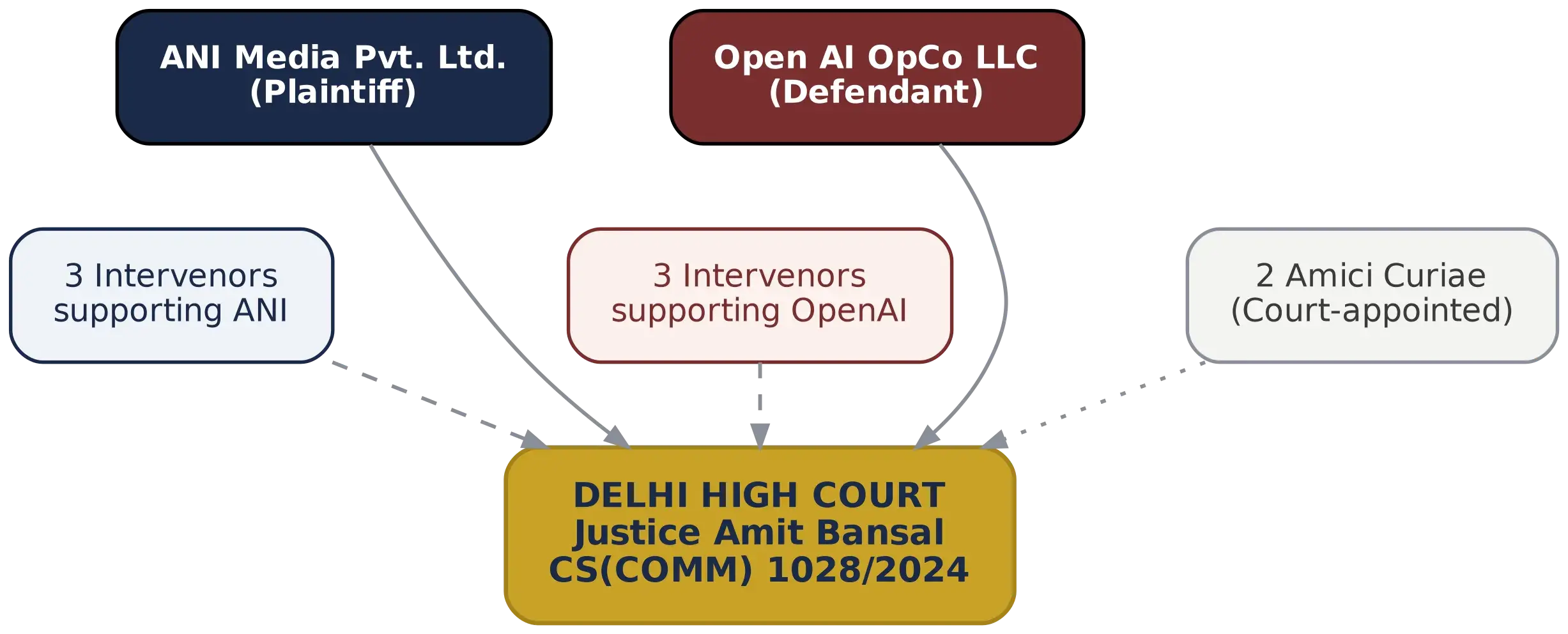
Figure 1: Parties, intervenors, and amici curiae before the Court.
A Plain-English Primer: What Happens Inside ChatGPT?
Each of the four issues in this case turns on a small set of technical concepts that the parties argued over at length. A short primer helps in following the analysis that follows.
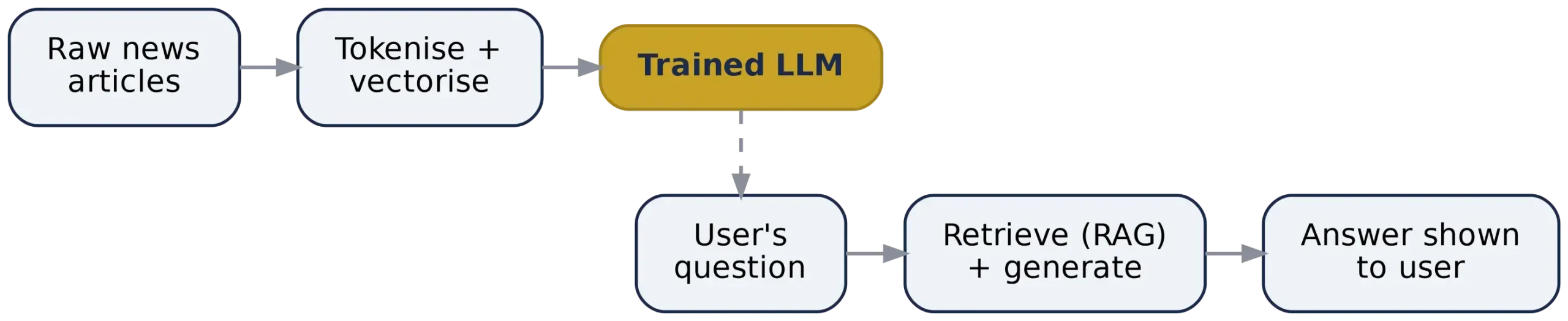
Figure 2: The two stages of an LLM’s life, training and answering users.
| Term | Plain-English meaning |
| Tokenisation | Text is broken into small numerical units (tokens) that a computer can process. |
| Vectorisation | Tokens are converted into numbers stored in a vector database, capturing statistical relationships between words. |
| Training | The process of learning statistical patterns of language from large volumes of text, not a process of memorising any one article. |
| LLM | The trained model that generates responses by predicting the most likely next token for a given prompt. |
| RAG | Retrieval Augmented Generation: the model fetches information from an external source, such as a live web page, at the time of answering. |
| De-tokenisation | Converting the model’s predicted tokens back into readable text for the user. |
| Fair dealing | The statutory exception in Section 52 of the Copyright Act, 1957 permitting certain uses of copyrighted work without the owner’s permission. |
| Prima facie | A preliminary view based on the material available at the interim stage, not a final finding after trial. |
ANI’s case rested on two separate claims: that articles are copied when they are stored during training (the training claim), and that ChatGPT reproduces them whenever it answers a user (the output claim)[4]. The Court treated these as distinct questions requiring separate proof, and reached different conclusions on each.
The Four Issues Before the Court
| Issue | Shorthand | The Question |
| Issue 4 | Jurisdiction | Can an Indian court hear a case about training that physically occurs on servers in the United States? |
| Issue 2 | Output | Does ChatGPT infringe ANI’s copyright when it answers a user’s question using what it learned? |
| Issue 1 | Storage | Does storing ANI’s copyrighted news articles to train ChatGPT amount to infringement? |
| Issue 3 | Fair Use | If storage is a copyrighted use, does Section 52 protect it as fair dealing? |
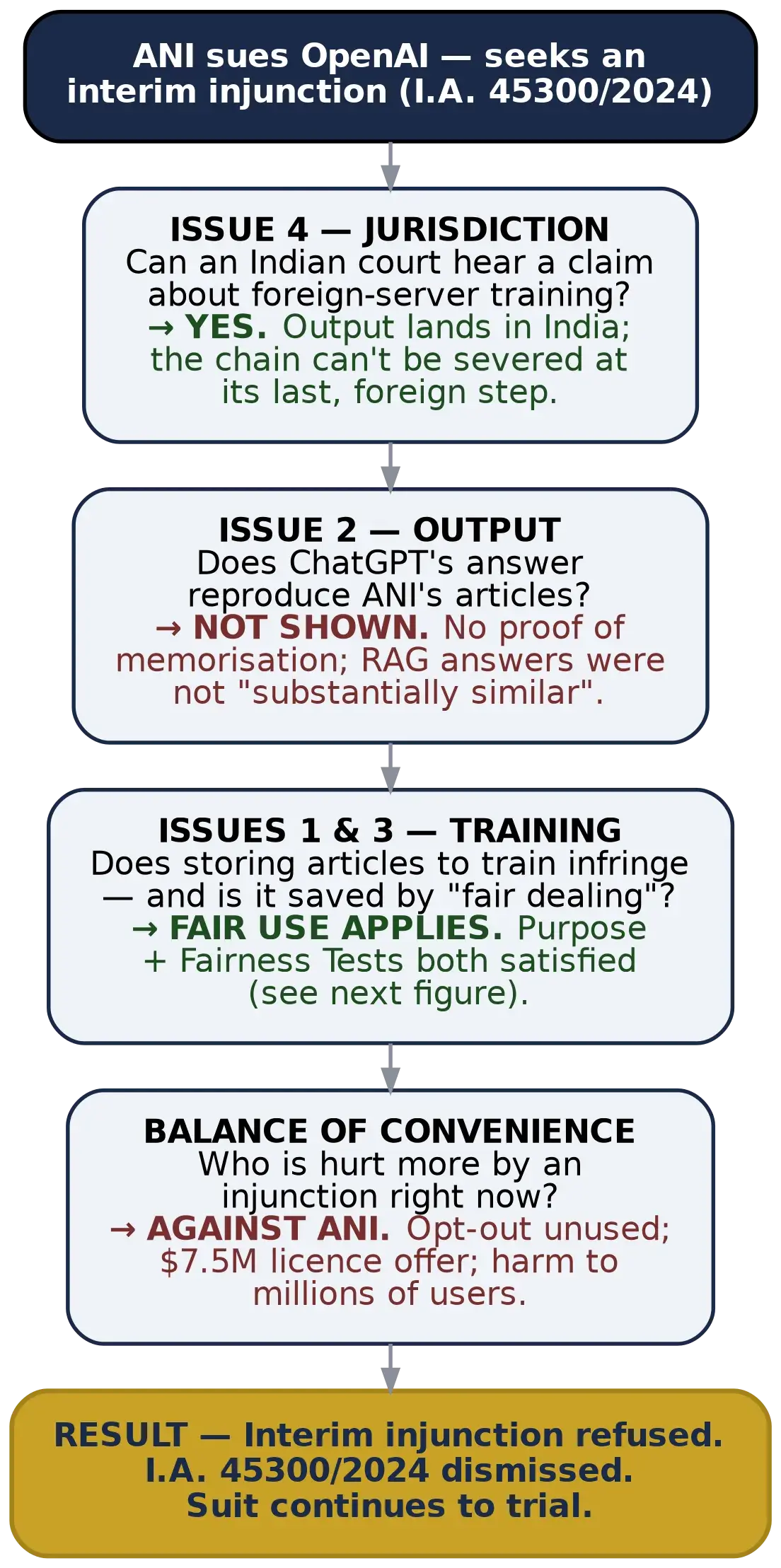
Figure 3: The Court’s roadmap through the four issues, in the order decided.
Issue-by-Issue: What the Court Held
Issue 4: Jurisdiction
OpenAI argued that since training occurs on servers in the United States, an Indian court has no basis to adjudicate whether that training infringes Indian copyright law, and that the Copyright Act was never intended to operate extra-territorially[5].
The Court rejected this. On territorial jurisdiction, it held that Indian courts have the power to hear a copyright dispute where the plaintiff is based in India and the defendant’s services are actively used here, applying Section 62 of the Copyright Act read with Section 20 of the CPC. On the training claim specifically, the Court reasoned that storing ANI’s works on US servers is merely “a terminal step in the chain of events which begin from access of copyrighted works from India and transmission of the same abroad”[6]. Severing the two, the Court held, “would lead to evasion of Indian copyright law by infringers who shift the terminal link to servers abroad”[7].
The Court relied on its own recent decision in Neetu Singh v. Telegram FZ LLC[8], where a Coordinate Bench held that Telegram locating its servers in Singapore did not deprive Indian copyright owners of a remedy in India, reasoning the Court found “fully applicable” here[9]. OpenAI’s reliance on Exphar SA v. Eupharma Laboratories Ltd.[10], Blueberry Books v. Google India[11], and the purposeful availment test in Banyan Tree Holding (P) Ltd. v. A. Murali Krishna Reddy[12] was found misplaced for a training claim of this kind.
Finding
On a prima facie view, this Court has territorial jurisdiction over the suit, and the alleged infringement from training does not amount to an impermissible extra-territorial application of the Copyright Act.[13]
Issue 2: Does ChatGPT’s Answer Infringe?
ANI argued that ChatGPT’s responses are built by de-tokenising stored data, in effect reconstructing its original text, and that some outputs were exact or near-exact copies of its articles, amounting to memorisation and regurgitation[14]. ANI supported this with illustrative examples set out at paragraph 15 of its interim application.
The Court found that ANI’s illustrations were generated after the relevant training had taken place, so they could not by themselves establish that the model had been trained to memorise and later regurgitate ANI’s specific articles[15]. These were, at best, disputed questions to be resolved at trial with evidence[16]. Nor could the Court conclude, on the material before it, that ChatGPT’s responses, generated through Retrieval-Augmented Generation, were substantially similar to ANI’s original work[17].
Finding
ANI failed, at the prima facie stage, to establish either memorisation or substantial reproduction of its articles. The output claim does not succeed at this stage.[18]
Issues 1 and 3: Training and Fair Use
OpenAI did not deny that it stores copies of scraped articles during training. The dispute was whether this storage is protected by Section 52(1)(a) of the Copyright Act, which excuses “a fair dealing with any work … for the purposes of, (i) private or personal use, including research”[19]. Since the three limbs of the section are disjunctive, OpenAI only needed to succeed on one, and ran its defence on limb (i)[20]. The Court applied a two-part test: a Purpose Test and a Fairness Test[21].
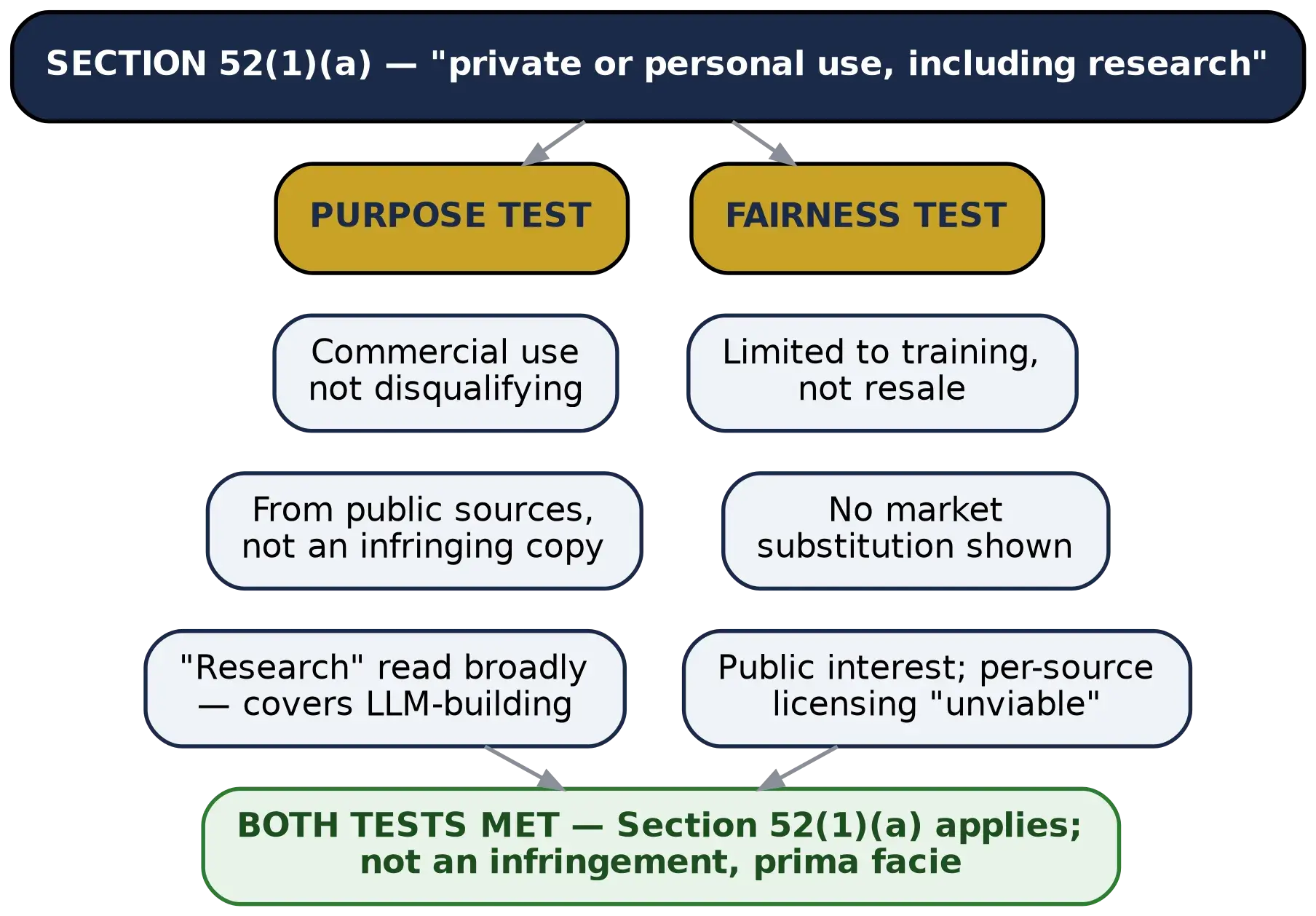
Figure 4: The two-part fair use test and how each limb was satisfied.
The Purpose Test
- Commercial use is not disqualifying. Section 52(1)(a) contains no non-commercial requirement, unlike other specific carve-outs in the same section (for example, sections 52(1)(ad), (k), (l), (n), and (o)) that expressly say so[22]. A paid book review or a commercially syndicated news report can equally claim the section 52(1)(a) defence.
- The training data was lawfully obtained. The material was scraped from publicly accessible websites, not copied from an already infringing source.
- “Research” is read broadly. Drawing on CCH Canadian Ltd. v. Law Society of Upper Canada[23], the Court held that building an LLM’s underlying knowledge base is itself a form of research within Section 52(1)(a)(i).
The Fairness Test
- Use was limited to training, not resale. OpenAI was not shown to be re-selling or re-publishing ANI’s articles as a substitute news product.
- No market substitution was shown. “Except for bare averments, nothing has been placed on record on behalf of ANI to show that they have lost any market share or there has been a reduction in subscription revenues due to operations of Open AI”[24]
- Public interest favoured OpenAI. The Court noted the wider benefit of LLMs in education, research, and accessibility[25], and observed that requiring a licence from every data source would make building such systems “economically unviable”[26].
The judgment draws on three American decisions dealing with similar questions: Bartz v. Anthropic PBC[27], Kadrey v. Meta Platforms, Inc.[28], and Authors Guild v. Google, Inc.[29], the Google Books case. None binds an Indian court, but the Court treats their reasoning, that transformative purpose rather than commercial motive is the true test of fairness, as persuasive support for reading Section 52(1)(a) the same way.
Finding
Both the Purpose Test and the Fairness Test stand satisfied. OpenAI’s storage of ANI’s literary works for training its LLMs falls within Section 52(1)(a) of the Copyright Act and, prima facie, does not amount to infringement.[30]
Why the Interim Injunction Was Refused
Even setting the fair use finding aside, an interim injunction requires the Court to weigh the balance of convenience and the risk of irreparable injury separately. Here too, the balance tipped against ANI.
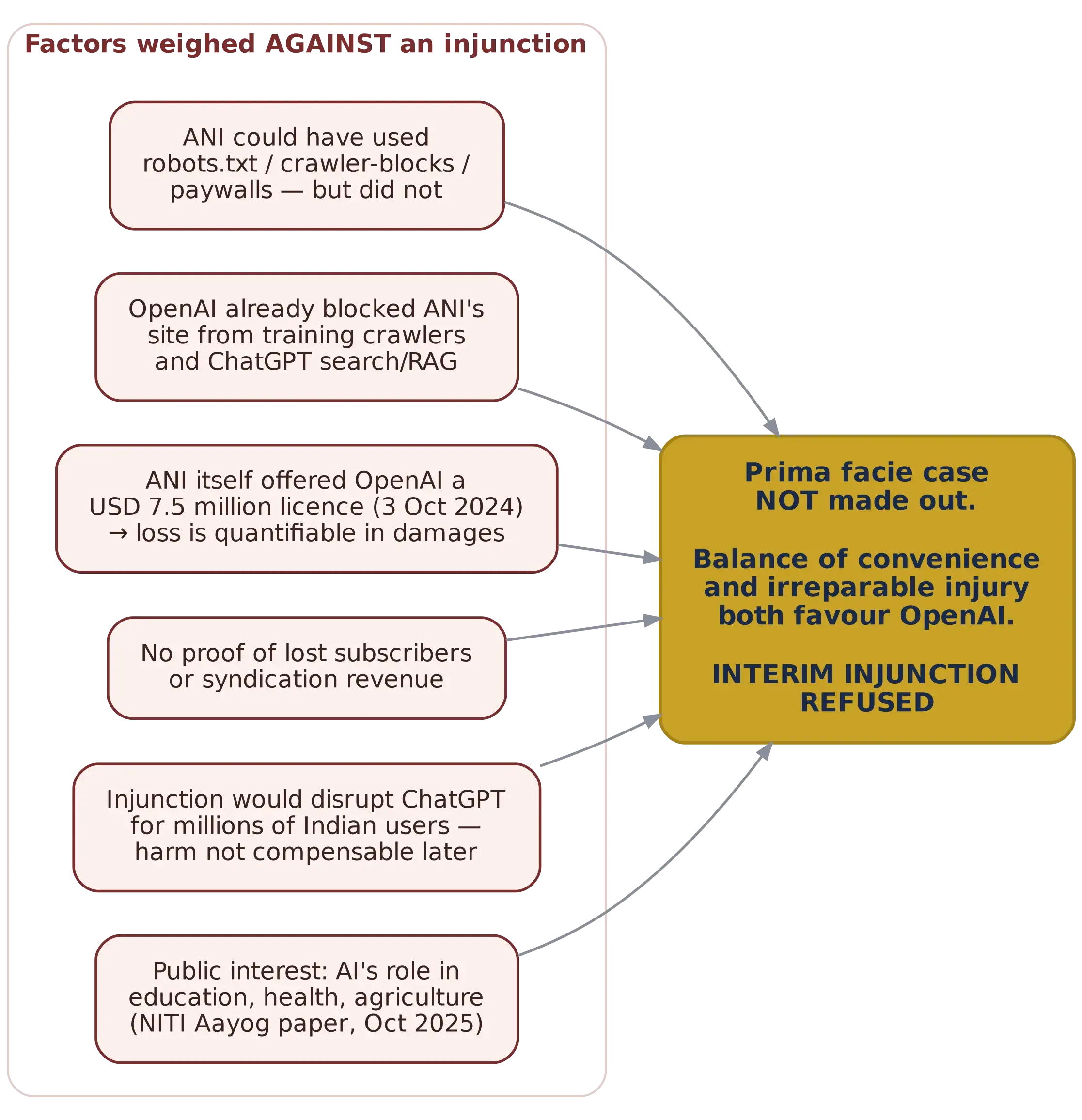
Figure 5: Factors weighed in refusing the interim injunction.
- ANI had the tools to opt out, and did not use them. It was “an admitted position that ANI has the ability to block its website vis-a-vis any third-party including Open AI”, yet “evidently ANI has not exercised the same”[31]
- OpenAI had already acted on its own. OpenAI told the Court it had internally blocked ANI’s website from its training crawlers and, separately, from the ChatGPT search function and RAG[32]
- ANI’s own licence offer undercut its urgency. By a letter dated 3rd October 2024, ANI had offered OpenAI a licence to its content for USD 7.5 million. The Court read this as proof that ANI’s claim is quantifiable and can be compensated in monetary terms[33]
- There was no proof of actual commercial loss. No averment or evidence showed that OpenAI’s activities had caused ANI to lose subscribers or syndication revenue[34]
- Harm to OpenAI’s users would be real and difficult to reverse. An injunction would disrupt ChatGPT for millions of Indian users, many of them non-paying[35]
- Public interest weighed against an injunction. The judgment cites AI’s role in education, healthcare, agriculture, and financial services, referring to a NITI Aayog paper on AI for inclusive societal development[36], and treats public interest as a distinct fourth factor in interim injunction analysis in IP matters, citing Zydus Lifesciences Ltd. v. E.R. Squibb & Sons LLC[37], Hoffmann-La Roche AG v. NATCO Pharma Ltd.[38], and Astrazeneca AB v. Intas Pharmaceuticals Ltd.[39].
Finding
On the touchstone of balance of convenience and irreparable injury, the Court was not inclined to grant an interim injunction at this stage.[40]
How Does This Compare Globally?
The judgment itself looks abroad for guidance. Two comparators recur throughout its reasoning.
| Jurisdiction | Matter Referenced | Legal Approach | Status |
| United States | Bartz v. Anthropic PBC; Kadrey v. Meta Platforms, Inc.; Authors Guild v. Google, Inc. | A four-factor fair use test under 17 U.S.C. section 107, with transformative purpose as the central inquiry | Treated as persuasive authority throughout the fair use analysis |
| United Kingdom | Getty Images (US) Inc. v. Stability AI Inc. | UK copyright law; the training claim was not pressed since training occurred outside the UK | Cited on the territoriality question also decided in this ruling |
| India | ANI Media Pvt. Ltd. v. Open AI OpCo LLC | A statutory, two-part fair dealing test under section 52(1)(a): Purpose Test and Fairness Test | Interim injunction refused on 24th July 2026; suit pending trial |
Table 1: Comparators drawn on in the judgment itself.
The American cases are the closest analogues. Both Bartz and Kadrey hold that training an LLM on copyrighted text serves a purpose and character different from the original works, favouring a fair use finding[41]; Authors Guild v. Google adds that the more transformative a use, the less weight its commercial character carries[42]. Getty Images v. Stability AI was cited chiefly on territoriality: Getty did not press its UK training claim once it became clear the training itself occurred abroad[43], a version of the same jurisdictional question the Delhi High Court had to resolve for ANI’s training claim.
Key Indian Precedents Relied On
- The “DU Photocopy” case, The Chancellor, Masters and Scholars of the University of Oxford v. Rameshwari Photocopy Services[44]. The Division Bench held that photocopying course-pack extracts for educational use fell within Section 52(1)(a)’s exception for instruction, since educational purpose can outweigh a publisher’s commercial interest.
- India TV Independent News Service Pvt. Ltd. v. Yashraj Films Pvt. Ltd.[45]. The Delhi High Court held that the purpose and character of a use, not merely the fact of copying, is central to the fair-dealing analysis, a principle running through the Purpose Test discussion in this case.
- Super Cassettes Industries Ltd. v. Hamar Television Network Pvt. Ltd.[46]. Cited directly for the proposition that commercial use, without more, does not take a dealing outside Section 52(1)(a).
- Neetu Singh v. Telegram FZ LLC[47]. Held that a defendant locating its servers outside India does not deprive an Indian copyright owner of a remedy here, the basis for the jurisdiction finding in this case.
Conclusion
“I am of the prima facie view that Open AI’s act of storing ANI’s original literary works for training LLMs underlying ChatGPT falls under Section 52(1)(a) of the Copyright Act and therefore does not amount to infringement… ANI has failed to make out a prima facie case for grant of interim injunction. Balance of convenience is also against grant of interim injunction. Irreparable injury would be caused not only to Open AI but also to the public at large, if an interim injunction is granted.”[48]
On that reasoning, I.A. 45300/2024 was dismissed[49].
Key Takeaways
- Jurisdiction travels with the output. Indian courts will hear a copyright claim over AI training even where the training itself happens abroad, so long as the output is consumed in India.
- Opt out, or explain why not. A publisher’s failure to use available technical opt-out tools carries real weight at the interim stage.
- Commercial training can still be fair use. Training an LLM on scraped news content can qualify as fair dealing under Section 52(1)(a), even where the use is commercial.
- Proof of output infringement needs more. An output claim needs solid, pre-training evidence of memorisation or substantial similarity: illustrations gathered after training will not suffice.
- A licence offer can cut both ways. Making a licensing offer to the alleged infringer may later be used to show that any loss is quantifiable in damages, weakening the case for an injunction.
None of this is final. The suit, CS(COMM) 1028/2024, continues to trial, where ANI may build a fuller record on memorisation and market harm, and an order refusing an interim injunction is ordinarily open to appeal before a Division Bench. The judgment is, for now, a considered first word from an Indian court on how a century-old statute applies to a new technology, not the last.
Diwang Mishra, Legal Intern at S.S. Rana & Co., has assisted in the research of this Article.
Our Coverage on LinkedIn: https://www.linkedin.com/feed/update/urn:li:activity:7490999730819420160
[1] ANI Media Pvt. Ltd. v. Open AI OpCo LLC, CS(COMM) 1028/2024 (Delhi High Court, judgment dated 24th July 2026, Bansal J.), available at https://delhihighcourt.nic.in/app/showFileJudgment/ABL24072026SC10282024_171649.pdf. Copyright Act, 1957, s.52(1)(a), available at https://copyright.gov.in/documents/copyrightrules1957.pdf.
[2] Id., ¶28.
[3] Id., ¶29 and the cause title, listing I.A. 470/2025 (Federation of Indian Publishers), I.A. 2199/2025 (Digital News Publishers Association and others), I.A. 4027/2025 (Indian Music Industry), I.A. 4615/2025 (Flux AI Labs), I.A. 4616/2025 (Indian Global AI Providers), and I.A. 10766/2025 (Broadband India Forum).
[4] Id., ¶57 (output claim) and ¶127 (training claim), summarising ANI’s submissions.
[5] Id., ¶36.2-36.3, summarising OpenAI’s submissions on Section 62 read with Section 1(2) of the Copyright Act.
[6] Id., ¶51.
[7] Id., ¶51.
[8] 2022 SCC OnLine Del 2637. Judgment, ¶52.
[9] Id., ¶53.
[10] (2004) 3 SCC 688.
[11] 2016 SCC OnLine Del 3338.
[12] 2009 SCC OnLine Del 3780.
[13] Id., ¶55.
[14] Id., ¶57.1-57.4, summarising ANI’s submissions.
[15] Id., ¶124.
[16] Id., ¶124.
[17] Id., ¶125.
[18] Id., ¶¶124-125.
[19] Copyright Act, 1957, s.52(1)(a)(i). Judgment, ¶170.
[20] Id., ¶171.
[21] Id., ¶¶95-128.
[22] Id., ¶¶176-179, citing Super Cassettes Industries Ltd. v. Hamar Television Network Pvt. Ltd., 2010 SCC OnLine Del 2086.
[23] (2004) 1 R.C.S. 339 (Supreme Court of Canada), cited at Judgment, ¶180: “Research must be given a large and liberal interpretation… Lawyers carrying on the business of law for profit are conducting research within the meaning of s. 29 of the Copyright Act.”
[24] Id., ¶250, and the finding at ¶251 that OpenAI’s use would not cause ANI actual or potential damage.
[25] Id., ¶¶252-254.
[26] Id., ¶268.
[27] No. 3:24-cv-05417 (N.D. Cal.). Judgment, ¶¶80, 199, 247, describing LLM training as “quintessentially transformative”, comparable to “training schoolchildren to write well”.
[28] No. 3:23-cv-03417 (N.D. Cal.). Judgment, ¶248.
[29] 804 F.3d 202 (2d Cir. 2015). Judgment, ¶249.
[30] Id., ¶256.
[31] Id., ¶262.
[32] Id., ¶262.
[33] Id., ¶265.
[34] Id., ¶264.
[35] Id., ¶269.
[36] NITI Aayog, ‘Roadmap on AI for Inclusive Societal Development’ (October 2025), cited at Judgment, ¶267, available at https://www.niti.gov.in/sites/default/files/2025-10/Roadmap_On_AI_for_Inclusive_Societal_Development.pdf.
[37] FAO(OS)(COMM) 120/2025, decided 12th January 2026.
[38] CS(COMM) 567/2024, decided 24th March 2025.
[39] 2020:DHC:3125.
[40] Id., ¶270.
[41] Id., ¶¶247-248.
[42] Id., ¶249.
[43] [2025] EWHC 38 (Ch). Judgment, ¶42.5 and fn.17.
[44] 2016 SCC OnLine Del 6229 (Division Bench). Judgment, ¶¶185, 228.
[45] (2012) SCC OnLine Del 4298. Judgment, ¶233.
[46] 2010 SCC OnLine Del 2086. Judgment, ¶178.
[47] 2022 SCC OnLine Del 2637. Judgment, ¶¶52-53.
[48] Id., ¶¶271-272.
[49] Id., ¶273.