

By Shilpi Saurav Sharan and Huda Jafri
Introduction
Can a pharmaceutical giant’s two-decade-old brand name ‘A TO Z’ command exclusive rights over those three terms in the multivitamin market? And what happens when a smaller competitor enters with a composite mark containing the same alphabetical endpoints, embedded within an entirely different word? The Hon’ble Delhi High Court answered both questions decisively in January 2026, while vacating an interim injunction it had granted barely a year earlier against Prevego Healthcare’s ‘MULTIVEIN AZ’ mark.
This case is a timely reminder that commercial longevity and impressive sales figures do not automatically rescue a trade mark that describes what it sells. Hon’ble Justice Tejas Karia’s ruling in the case of Alkem Laboratories Limited v. Prevego Healthcare and Research Pvt. Ltd.[1], cuts through decades of brand investment to deliver a clear message: device mark registrations do not confer word-level monopolies and that generic terms cannot be appropriated however long they are used, and courts in equity will not assist a party that withholds material facts.
The Parties and Their Marks
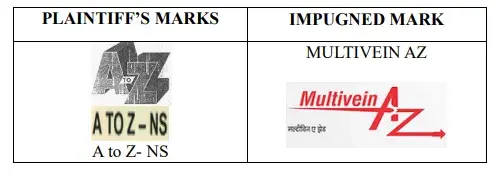
| PLAINTIFF’s MARKS | DEFENDANT’s MARKS |

A TO Z Device Mark Registered since 1998 | Classes 5, 29, 30 |

MULTIVEIN AZ Composite Mark In use since August 2020 | Class 5 |
Alkem Laboratories Limited (Plaintiff), founded in 1973, is one of India’s leading pharmaceutical company operating across 40 countries with 19 manufacturing units and a portfolio exceeding 800 brands, six of which rank among India’s top 100 pharmaceutical brands. It has marketed its ‘A TO Z’ range of multivitamin, multimineral and nutraceutical products continuously since 1998, and its ‘A TO Z-NS’ variant since 2008. Plaintiff’s device marks (Application Nos. 1537705 and 1537706) depicting the letters ‘A’, ‘to’ and ‘Z’ in a stylized three-dimensional intertwined manner are registered with respect to goods in Classes 29 and 30. With respect to class 5 i.e. the pharmaceutical class, Plaintiff held a trademark registration only for ‘A TO Z-NS’ (Application No. 2702805) and a separate device mark application in Class 5 (No. 1270049, filed 2002) has been under opposition since 2007.
The Defendants in the case i.e. Prevego Healthcare and Research Private Limited, incorporated in 2018, markets safe, effective and affordable medicines across all major therapeutic segments. Starting with 11 products, it grew rapidly to over 1,500 pharmaceutical.. The Defendants have submitted that since August 2020, it has used the composite mark ‘MULTIVEIN AZ’ featuring the word ‘MULTIVEIN’ in flowing script alongside a stylized ‘AZ’ device with an arrow for antioxidant, multivitamin and multimineral supplement tablets in Class 5. Prevego also holds a registered word mark ‘MULTIVEIN’ (Application No. 4742710, Class 5).
Brief Facts
In 2024, Plaintiff first encountered Prevego’s ‘MULTIVEIN AZ’ product in the market and found its packaging featuring a red and gold colour scheme with a stylized ‘AZ’ device mark which was allegedly deceptively similar to Plaintiff’s trade dress. Plaintiff issued a Cease-and-Desist Notice dated December 27, 2024, to which Prevego replied on January 20, 2025, asserting that the marks were visually and phonetically distinct and that ‘A TO Z’ was a common expression denoting completeness.
On January 30, 2025, the Hon’ble Delhi High Court granted an ex-parte ad-interim injunction restraining Prevego from using the Impugned Mark. At the hearing on 17 February 2025, Plaintiff proposed that if Prevego relinquished the use of ‘AZ’ entirely, then the Plaintiff would waive costs and damages. Prevego declined. Arguments concluded on 12 November 2025 and judgment was delivered on 17 January 2026.
Plaintiff also placed on record advertising expenditure ranging from INR 183.81 lakhs (2020-21) to INR 451.89 lakhs (2019-20) under the ‘A TO Z’ range, arguing that this sustained investment had rendered the mark a recognized source identifier over more than two decades.
The Marks in Dispute
Plaintiff’s Trade Mark Portfolio
| App. No. | Mark | Date Filed | User Claim | Class | Status |
| 1537705 | A TO Z (Device) | 07.03.2007 | 01.04.1998 | 29 | Registered |
| 1537706 | A TO Z (Device) | 07.03.2007 | 01.04.1998 | 30 | Registered |
| 2702805 | A TO Z-NS | 21.03.2014 | 01.04.2008 | 5 | Registered |
| 1681873 | A TO Z-NS (Word) | 29.04.2008 | Proposed | 29 | Registered |
| 1681874 | A TO Z-NS (Word) | 29.04.2008 | Proposed | 30 | Registered |
| 1270049 | A TO Z (Device) | 2002 | 5 | Under Opposition since 2007 |
Side-by-Side Comparison of the impugned Marks
Trade Dress: The Packaging Battle
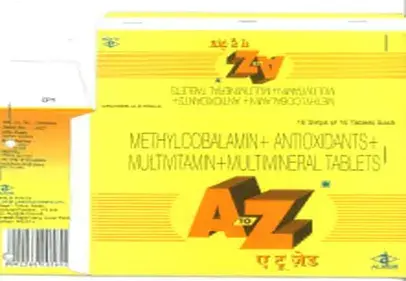
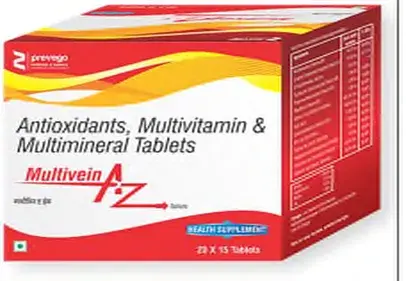
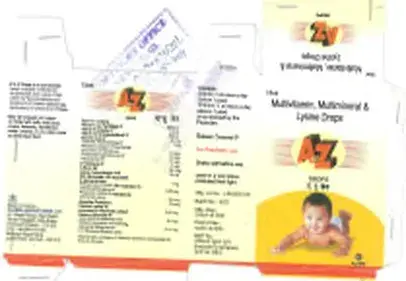
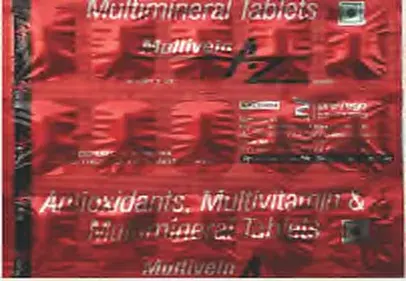
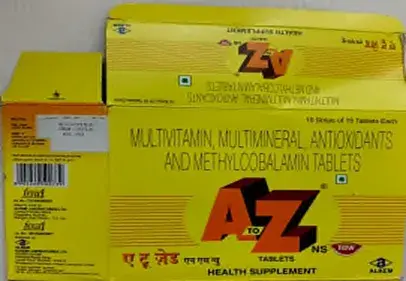
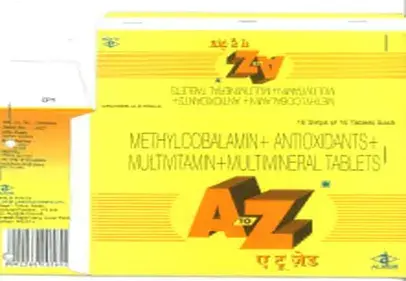
Plaintiff alleged that Prevego had also copied the overall trade dress of its products comprising of the colour scheme (yellow/gold with red accents), layout, get-up and packaging arrangement. Below is the comparison of the parties’ packaging as placed before the Court.
| PLAINTIFF’S TRADE DRESS | IMPUGNED TRADE DRESS (PREVEGO) |
 |
 |
 |
 |
 |
|
 |
|
 |
Procedural History
| 30.01.2025 | Ex-parte ad-interim injunction granted restraining Prevego from using the Impugned Mark in any form. |
| 17.02.2025 | Plaintiff stated no objection to ‘MULTIVEIN’ and proposed that if Prevego dropped ‘AZ’, costs and damages would be waived. Prevego allowed to exhaust existing stock. |
| 06.03.2025 | Notice issued in I.A. 6055/2025 Prevego’s application to vacate the injunction. |
| 08.08.2025 | Court allowed Prevego to place additional documents on record; Plaintiff given liberty to respond. |
| 12.11.2025 | Arguments concluded; judgment reserved. |
| 17.01.2026 | Judgment delivered. Injunction application dismissed; ex-parte order vacated. |
Contentions of the Parties
Plaintiff’s Case
- The mark ‘A TO Z’ is coined and arbitrary for health supplements and has been in continuous, extensive use since 1998. Plaintiff, as the prior user, enjoys superior rights.
- Revenue exceeding INR 34,457 lakhs in 2023-24 under the A TO Z range alone demonstrates immense goodwill and secondary meaning.
- The Plaintiff also made references to the case of Kaviraj Pandit Durga Dutt Sharma v. Navaratna Pharmaceutical Laboratories[2], wherein it was held that once the essential features of a mark are copied, differences in get-up are immaterial.
- Reference was also made to the case of United Biotech Pvt. Ltd. v. Orchid Chemicals & Pharmaceuticals[3], wherein it was held that where a label or device mark is registered, the word mark embedded within it is also protected..
- The Plaintiff also contended that vulnerable consumers, such as children, pregnant women, the elderly and the infirm are at risk of purchasing Prevego’s products in the belief that they originate from Plaintiff.
Prevego’s Defence
- Device marks protect only their specific visual representation, not the underlying letters or words. Simple alphabetical sequences cannot be monopolized.
- ‘A TO Z’ is a generic and descriptive phrase denoting completeness; for multivitamins it describes a product covering vitamins from A to Z. Generic terms are incapable of exclusive appropriation as held in the case of Pernod Ricard India Pvt. Ltd. v. Karanveer Singh Chhabra[4].
- The Defendant also contended that Plaintiff holds no word mark for ‘A TO Z’ in Class 5 and that it’s device mark application in Class 5 (No. 1270049) has been under opposition since 2007.
- Under the anti-dissection rule (Section 17, Trade Marks Act, 1999), marks must be compared as a whole. The element ‘MULTIVEIN’ fundamentally distinguishes the impugned mark phonetically, structurally and in commercial impression.
- It was also contended by the Defendant that Plaintiff concealed in the proceedings that it’s three trade mark applications in class 5:
- 1270049 (under opposition since 2007)
- 750155 (withdrawn) and
- 816752 (abandoned)
And that such material suppression disentitled the Plaintiff from equitable relief.
- ‘AZ’ in the pharmaceutical industry is a widely used abbreviation for Azithromycin; pharmaceutical consumers would not associate ‘MULTIVEIN AZ’ with Plaintiff’s ‘A TO Z’.
- A Google search for ‘A TO Z’ yields overwhelmingly diverse results unrelated to Plaintiff, demonstrating the generic character of the phrase. A search for ‘MULTIVEIN AZ’ returns results predominantly relating to Prevego’s product confirming it functions as a distinct source identifier.
- Copyright law does not protect common or generic alphabetical combinations; Plaintiff’s copyright in its stylized logo cannot monopolize all stylized uses of ‘A’ and ‘Z’ together.
The Court’s Analysis and Findings
Issue 1: Are Plaintiff’s Marks Generic or Descriptive?
The Hon’ble Court observed that ‘A TO Z’ was descriptive and generic in the context of multivitamin and nutraceutical products. Since vitamins were commonly identified by alphabetical designations (Vitamin A, B, C, D etc.), a product described as covering ‘A to Z’ naturally conveyed a full spectrum of vitamins, thereby directly describing the character and nature of the goods.
“The Mark ‘A TO Z’ describes the nature of the goods being provided by the Plaintiff as well as the Defendant. Hence, the Mark ‘A TO Z’ is descriptive in nature. Therefore, the Plaintiff could not be allowed to monopolize the use of the letters ‘A’ and ‘Z’.
The Court critically relied on Plaintiff’s own admission before the Trade Marks Registry in opposition proceedings for Application No. 1270049 (Plaintiff’s device mark application for ‘A TO Z’ in Class 5), where Plaintiff had conceded that its device mark’s protection is limited to its unique ‘intertwined and conjoined manner’ of stylization, thereby acknowledging that the underlying letters ‘A’ and ‘Z’ were not a subject of any exclusive monopoly.
The Court further noted that Plaintiff’s prior abandoned and withdrawn applications for the term ‘A TO Z’ as a word mark in Class 5 (Application Nos. 750155 and 816752), and the continued pendency of the device mark application (No. 1270049) under opposition since 2007, supported the position that ‘A TO Z’ carries no exclusive association with Plaintiff in the relevant class. Even if the marks were considered descriptive rather than generic, the Court held that secondary meaning must be established by cogent evidence of consumer perception and that commercial success figures alone are insufficient.
Issue 2: Is the Impugned Mark Deceptively Similar?
Applying the anti-dissection rule under Section 17 of the Trade Marks Act, 1999, and the Supreme Court’s ruling in Pernod Ricard India (supra), the Court held that composite marks must be assessed as a whole. On a holistic comparison, the Court found:
- That visually the marks in question were distinct. The Defendant’s mark featured ‘MULTIVEIN’ in flowing script with a stylized ‘AZ’ arrow device whereasPlaintiff’s marks displayed a 3D intertwined rendering of ‘A’, ‘to’ and ‘Z’.
- That phonetically the addition of ‘MULTIVEIN’ changed the overall sound and rhythm of Defendant’s mark. The word ‘to’, present in Plaintiff’s marks was absent from the Defendant’s mark.
- That conceptually, Defendant’s mark- ‘MULTIVEIN AZ’ evoked a product associated with multiple veins or a vascular network whereas Plaintiff’s mark- ‘A TO Z’ simply conveyed completeness.
- That the colour scheme used by Defendant’s mark was uses white, red, orange and gold whereas the Plaintiff Plaintiffprimarily used yellow and white for packaging of its medicine.
The Court concluded that the test of deceptive similarity as laid down in the Kaviraj Pandit case (supra) was not satisfied in the instant case and that the impugned mark was not deceptively similar to Plaintiff’s marks.
The Court drew a clear distinction between Plaintiff’s rights in its specific stylized device mark (which are real and registered) and any claim to monopolize the letters ‘A’ and ‘Z’ as such. Registration of a device mark grants exclusivity over the composite visual not over its alphabetical building blocks. The Court distinguished between two separate questions: whether Plaintiff’s stylized ‘A TO Z’ device mark was validly registered, and whether that registration gave Plaintiff the right to prevent others from using the individual letters ‘A’ and ‘Z’ in any form (which it rejected). A device mark registration confers exclusivity over the composite mark as a whole — it does not extend to the underlying letters or words viewed in isolation, especially when those letters are generic or descriptive.
The Court also rejected Plaintiff’s argument based on the ‘dominant element’ or ‘prominent word’ test. The Court was of the opinion that while Plaintiff’s own marks prominently featured ‘A’ and ‘Z’, those letters could not be isolated from the composite mark to establish infringement, particularly when the impugned mark contained ‘MULTIVEIN’ as a substantial and independently meaningful component. The Court distinguished Crompton Greaves Consumer Electricals Limited v. V Guard Industries Limited[5]
Issue 3: Did Plaintiff Conceal Material Facts?
The Court observed from the facts and circumstances of the case that Plaintiff had not to disclosed- its 3 trademark applications falling in Class 5, which in the opinion of the Court were material to the proceedings:[6]
| App. No. | Mark | Year Filed | Status / Significance |
| 1270049 | ‘A TO Z’ (Device, Class 5) | 2002 | Under opposition since 2007 not disclosed in the plaint |
| 750155 | ‘A to Z’ (Word, Class 5) | 1997 | Withdrawn not disclosed |
| 816752 | ‘A TO Z’ (Word, Class 5) | 1998 | Abandoned not disclosed |
Relying on the case of S.K. Sachdeva v. Shri Educate Ltd. and Raman Kwatra and Anr. v. M/s KEI Industries Ltd. , the Court held that non-disclosure of material facts and contrary assertions disentitled Plaintiff from equitable relief, while not barring the suit itself from being maintained.
Plaintiff
Issue 4: Copyright in the Logo and Trade Dress
The Court declined to uphold Plaintiff’s copyright claim at the interim stage. The Court held that while Plaintiff held copyright in its specific stylized ‘A TO Z’ logo, the Copyright Act did not confer a monopoly over the letters ‘A’ and ‘Z’ in any form. The impugned Mark used those letters in a visually distinct manner.
With respect to the issue of trade dress, the Court noted that the Defendant’s trade dress used white, red, orange and gold as its primary colours with a flowing, ribbon-like layout, while the Plaintiff’s Plaintiff’s trade dress predominantly featured yellow and white colour scheme with a structured arrangement prominently displaying the ‘A TO Z’ logo in a three-dimensional effect. The Court was also of the view that the fonts, element arrangements and overall commercial impression of the competing packaging were materially different.
Held
Plaintiff
Holding that the mark ‘A TO Z’ was descriptive and generic in the context of multivitamin products, that Plaintiff had no exclusive right over the letters ‘A’ and ‘Z’, and that the impugned mark ‘MULTIVEIN AZ’ was neither identical nor deceptively similar to the plaintiff’s marks, the Hon’ble Delhi High Court dismissed Plaintiff’s application seeking an interim injunction (I.A. 2537/2025). The ex parte ad interim injunction granted against Prevego Healthcare on 30 January 2025 was accordingly vacated, and Prevego’s application for vacation of that order (I.A. 6055/2025) was allowed. Both interlocutory applications stand disposed of.
Conclusion
The decision serves as a reminder that commercial success and long use, however impressive, cannot transform a descriptive expression into an exclusive trademark. A mark that tells the consumer what a product contains rather than where it comes from will struggle to command the protection that a distinctive mark enjoys.
The case also underscores that a plaintiff approaching a court for equitable relief must do so with clean hands and complete disclosure. Plaintiff’s failure to place its adverse Class 5 trademark applications before the Court cost it the injunction, even as the suit itself was allowed to continue.
For the pharmaceutical and nutraceutical industry, the ruling is a practical caution. Device mark registrations protect the specific visual they depict and nothing more. They do not extend to the letters or words contained within them, particularly where those letters are part of everyday language. Businesses may certainly build their branding around common expressions, but they cannot, by doing so, fence off that language from the rest of the market. The alphabet, from A to Z, remains available to all.
[1] (CS(COMM) 84/2025)
[2] (AIR 1965 SC 980)
[3] (ILA (2012) V Delhi 325)
[4] (2025 SCC OnLine SC 1701).
[5] [2024:DHC:1852:-DB]
[6] [ILA (2012) V Delhi 325]
Our Coverage on LinkedIn: https://www.linkedin.com/feed/update/urn:li:activity:7459826366339788800