

By Rima Majumdar and Huda Jafri
A decision of a Division Bench of the Delhi High Court in Dabur India Limited v. Emami Limited[1], pronounced on May 22, 2026, is a significant addition to Indian passing off jurisprudence concerning trade dress protection. The dispute arose from Dabur’s launch of Cool King Thanda Tael and Emami’s allegation that the packaging and overall get-up of Dabur’s product is deceptively similar to the long-established trade dress of Navratna Ayurvedic Oil that is sold by Emami.
Having expressly confined its claim to passing off, the Plaintiff, Emami, succeeded before a Single Judge of the High Court, who restrained Dabur (Defendant) from selling its Cool King hair oil in a packaging that was deceptively similar to the Plaintiff’s.
On appeal, the Division Bench while upholding the Single Judge’s decision, passed certain relevant guidance on trade dress protection.
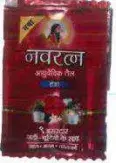
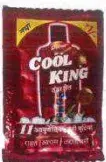
Trade Dress /Packaging in question
| Respondent/Plaintiff’s Trade Dress | Appellant/Defendant’s Trade Dress |
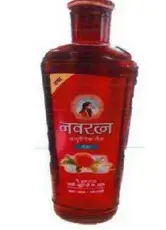 |
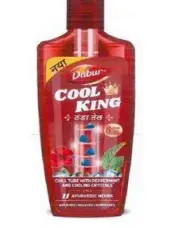 |
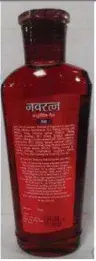 |
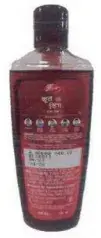 |
 |
 |
Factual Background
The dispute arises from a passing off action instituted by Emami Ltd., the proprietor of the well-known “Navratna Oil,” against a competing product launched by the defendant in 2023. Emami, which has been in the personal healthcare business since the 1970s, claimed extensive goodwill in its cooling oil product introduced in 1989 along with the tagline “Thanda Thanda Cool Cool,” supported by long-standing trademark, copyright, and design registrations, substantial sales turnover, and a dominant market share in the cooling oil segment. It was alleged that the defendant adopted deceptively similar marks such as “Cool King Thanda Tael” and imitated the plaintiff’s distinctive red trade dress, bottle shape, sachet presentation, and overall packaging, thereby misleading consumers and attempting to ride upon the plaintiff’s established reputation.
Appellant’s submissions
- The trade dress of the appellant is not similar to that of the respondent and the components of the packaging which have been deemed as the essential features are infact descriptive and common to the trade, not to be monopolised by a single entity.
- The colour of the packaging, cap, and the liquid have been considered in the impugned judgment whereas the respondent/plaintiff has given up its claim over the colour red.
- The judgment of the Single Judge considered the quantity of oil i.e., 270 ml in both the competing products as a factor against the appellant/defendant. Such a comparison of quantity of oil cannot be considered while analyzing distinctiveness.
- The impugned judgment in effect grants protection to the individual elements of the product, which have been held to be common to the trade and incapable of exclusive monopoly.
- That presence of the Appellant’s well-known house mark ‘DABUR’ will dispel any confusion.
- The subject matter trade dress was adopted only from 2017, hence goodwill from the year 1989 is wrong.
- The respondent has not produced any evidence to show that there is established goodwill and reputation of the trade dress in the market.
- The respondent has materially altered its packaging over the years and adopted a completely new trade dress in the year 2016, and substantial changes exist in all these packaging. Thus, extension of the goodwill which has been established with the earlier packaging cannot be extended to the subsequent trade dress.
- Impugned judgment has not applied the trinity test for passing off with respect to the trade dress of the respondent.
- Impugned judgment has also erred by holding that the trade dress had acquired secondary meaning based on the combination of the individual elements of the trade dress.
Respondent’s submissions
- Emami was the prior and established user of the distinctive red cooling oil trade dress and had acquired enormous goodwill through more than three decades of uninterrupted use. Reliance was placed on the Chartered Accountant’s certificate certifying sales of Rs. 4,927.03 crores specifically attributable to Navratna Ayurvedic Oil (Red Packaging), together with substantial advertising expenditure and overwhelming market share data.
- On the issue of deceptive similarity, Emami argued that Dabur had systematically replicated the essential visual features of Navratna Oil, including the red packaging, red cap, bottle shape, colour combination, illustrations of hibiscus flowers and ice cubes, the “Naya” promotional banner, and the words “Raahat”, “Aaram” and “Tarotaazgi” in precisely the same sequence. That the similarities were too extensive and too specific to be accidental.
- Emami also highlighted Dabur’s own launch advertisement featuring Navratna’s bottle and argued that the evolution of Dabur’s products from Him Sagar Tel to Super Thanda Tel and finally to Cool King Thanda Tael demonstrated a progressive movement towards Navratna’s trade dress. The absence of any plausible explanation for this convergence, according to Emami, constituted strong evidence of dishonest adoption.
- Dabur’s common-to-trade defence was not plausible as no significant competitor in the cooling oil segment had adopted a trade dress remotely resembling Navratna’s.
Appellate Court’s Findings
Upholding the Single Judge’s decision, the Appellate court gave the following findings:
- Prior user
At a prima facie stage, which is where an interim injunction application is adjudicated upon, the Court found that Emami was the prior adopter and user of the red trade dress/packaging for its oil, and Dabur was the second comer in the market for the same. - Deceptive Similarity and the Overall Impression Test
The central issue before the Court was whether Dabur’s trade dress was deceptively similar to that of Emami. In addressing this question, the Court reaffirmed the settled principle that passing off must be assessed on the basis of the overall commercial impression conveyed by the competing products rather than through a meticulous comparison of individual features.The Division Bench endorsed the findings of the learned Single Judge, who had concluded that the essential features of Emami’s Navratna oil trade dress had been replicated in Dabur’s packaging. These included the red bottle, red cap, similar bottle shape, the combination of red, white, yellow and gold colours, illustrations of hibiscus flowers, ice cubes and ayurvedic herbs, the yellow triangular “Naya” banner, and the words “Raahat”, “Aaram” and “Tarotaazgi” appearing in the same sequence.
The relevant perspective is that of a purchaser of average intelligence and imperfect recollection who encounters the product under ordinary market conditions. Applying this test, the Court concluded that the overall get-up of Cool King Thanda Tael conveyed the unmistakable impression of an imitation of Navratna Oil.
- Rejection of the red packaging being Common-to-Trade
The Division Bench found that the evidence of third-party users did not establish widespread adoption of the same combination of features by significant market participants. The examples relied upon by Dabur were either visually dissimilar or possessed only a negligible presence in the marketplace. Significantly, the major competitors in the cooling oil segment had adopted entirely different trade dresses despite competing in the same product category. - The House-Mark Defence
The Court rejected this contention of the Appellant because in a case of passing off, the consumer is one of average intelligence and imperfect recollection. This combined with the fact that the goods are being sold at a low cost, which would entail that the degree of care exercised by an average consumer at the time of purchase would be at a lower threshold, the presence of the house mark has little role to play in this background, given the other overlapping features in the trade dress. Hence confusion cannot be discountenanced. - Scope of Appellate Interference
Finally, in the evergreen words of the Supreme Court of India in Wander v. Antox [2] the Division Bench reiterated that an appellate court should exercise considerable restraint when hearing orders granting or refusing interim relief, which are discretionary in nature.Applying this standard, the Division Bench found no infirmity in the reasoning of the learned Single Judge. The Court further held that the requirements governing the grant of an interim injunction, including the existence of a serious triable issue, likelihood of confusion, balance of convenience, irreparable injury and public interest, were all satisfied in the present case. The appeal was accordingly dismissed.
Author’s note
The decision is a significant reaffirmation of the principles governing passing off in the context of trade dress. The Court emphasised that liability turns on the overall commercial impression of a product rather than on isolated comparison of individual features, and that even common elements may be protected when their combination has acquired distinctiveness through long and consistent use.
Equally important, the judgment clarifies that the presence of a well-known house mark does not, by itself, eliminate the likelihood of confusion where the overall get-up is deceptively similar, particularly in the case of low-cost consumer goods.
Although the findings are prima facie and subject to trial, the decision stands as a clear statement of Indian law on trade dress protection and consumer confusion in competitive FMCG markets.
Avni Shrivastava, Intern at S.S. Rana & Co. has assisted in the research of this article.
[1] FAO (OS) (COMM) 23/2026
[2] Wander Ltd. and Anr. v. Anto India P. Ltd, 1990 (Supp) SCC 727