
By Vikrant Rana and Shantam Sharma
Introduction
On 31 July 1995, India heard its first mobile ring, when the then Union Minister of Communications spoke from Delhi to the then Chief Minister of West Bengal in Kolkata. For most of the two decades that followed, India consumed mobile phones without making them. In 2014, the country had only two mobile phone manufacturing units and was approximately 78% import dependent, with roughly 75% of domestic demand in 2014-15 being met through imports. Today, India has over 300 mobile manufacturing units and imports account for about 0.02% of domestic demand.[1]
The turnaround followed a sequenced policy design. As the Ministry of Electronics and Information Technology has explained in Parliament, the Government built the ecosystem in stages, beginning with finished products, followed by sub-assemblies, then components, and eventually machinery and tools. Make in India was launched in 2014, the Phased Manufacturing Programme followed in 2017, the National Policy on Electronics came in 2019 and the Production Linked Incentive Scheme for Large Scale Electronics Manufacturing (PLI-LSEM) was rolled out in April 2020, supported by schemes for components, semiconductors and manufacturing clusters, the Electronics Component Manufacturing Scheme approved in April 2025 with an outlay of Rs 22,919 crore, and the permission of 100% foreign direct investment in the sector.[2]
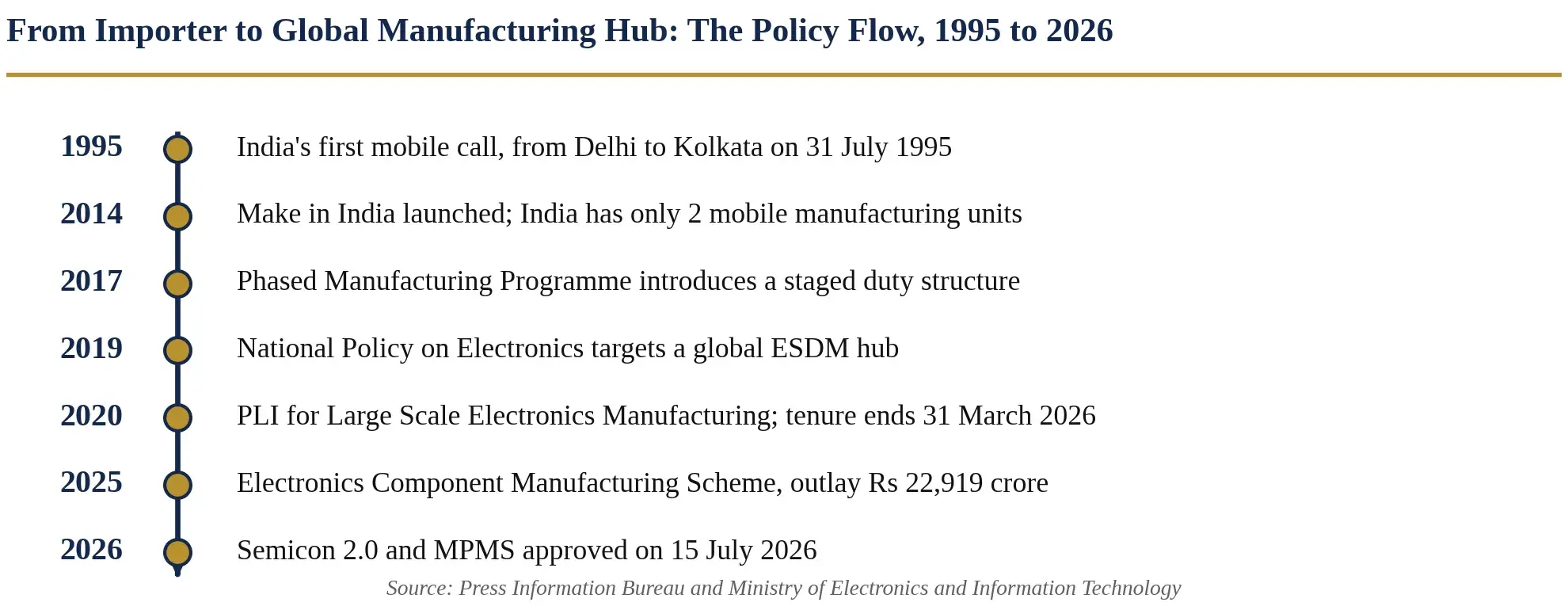
Figure 1: The policy flow from India’s first mobile call to the approval of MPMS
The Growth Story in Numbers
The results of twelve years of this effort were placed before the Lok Sabha on 22 July 2026. Production of electronics goods rose from about Rs 1.9 lakh crore in 2014-15 to about Rs 13.11 lakh crore in 2025-26, and exports of mobile phones from about Rs 1,500 crore to about Rs 2.59 lakh crore.[3] Three structural shifts stand out.[4]
- India has moved from being a net importer of mobile phones in 2014 to a net exporter, 99.2% of the mobile phones used in India are now made in India, and India is the second largest manufacturer of mobile phones in the world in volume terms.
- Smartphones, absent from India’s top 100 exported commodities in 2014, have emerged as the nation’s single largest standalone merchandise export product, overtaking individual traditional giants like high-speed diesel and loose polished diamonds. While the United States, the United Arab Emirates, and the Netherlands serve as the primary global destinations for finished devices, China and Hong Kong have integrated tightly into this network as a multi-billion-dollar corridor for advanced smartphone components and sub-assemblies, heavily bolstered by the Electronics Component Manufacturing Scheme (ECMS).[5]
- The sector supports about 25 lakh direct and indirect jobs, of which the mobile ecosystem accounts for about 12 lakh, and in certain high precision segments women constitute almost 70% of the workforce.
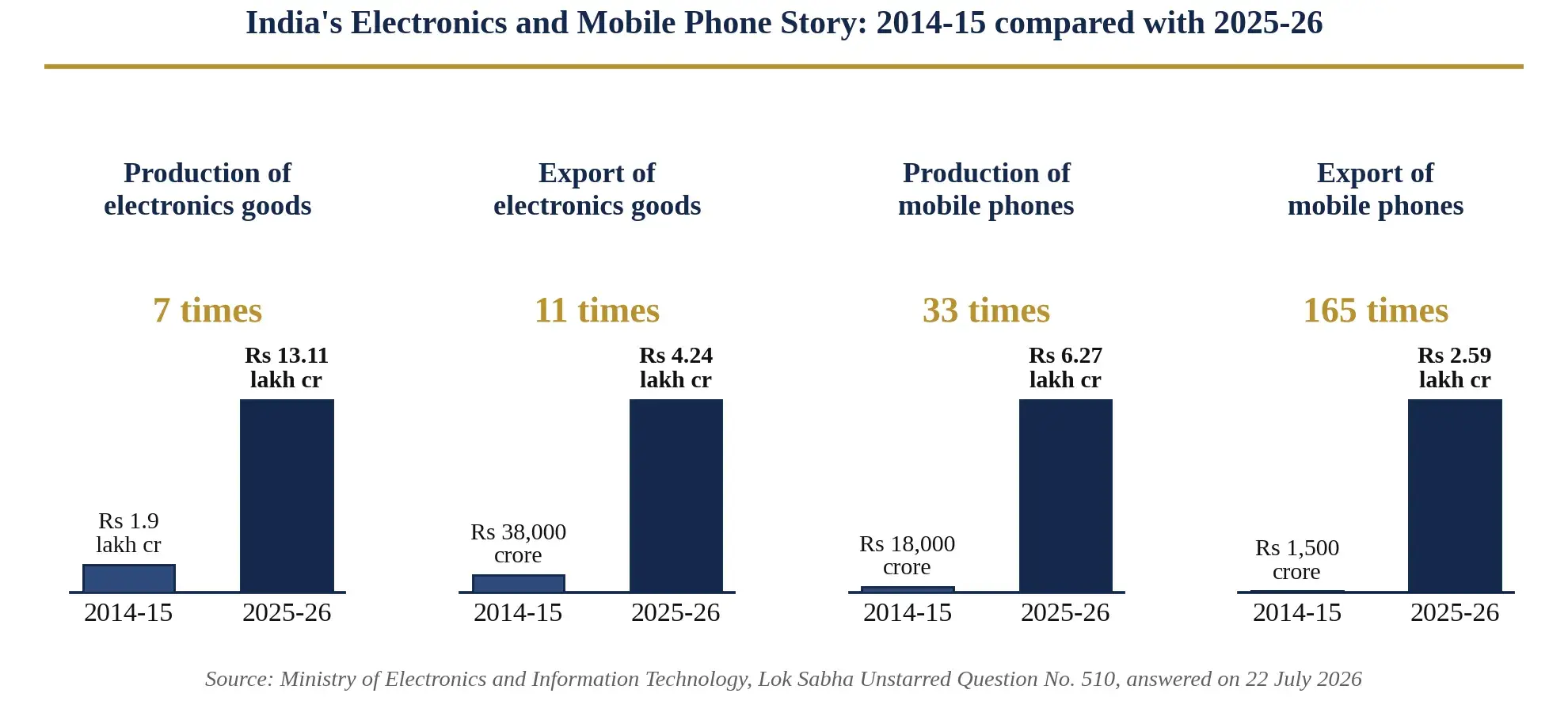
Figure 2: Growth in electronics and mobile phone production and exports
The Mobile Phone Manufacturing Scheme
On 15 July 2026, the Union Cabinet chaired by the Prime Minister approved the Mobile Phone Manufacturing Scheme with a budgetary outlay of Rs 62,500 crore. The stated objectives are to further scale up production, deepen domestic value addition, strengthen supply chain resilience and enhance global competitiveness. Importantly, the scheme also aims at building Indian brands so as to achieve technological sovereignty, capture large economic value and create Indian patents in design and research and development. The scheme takes over from PLI-LSEM, whose tenure ended on 31 March 2026.[6]
On the same day, the Cabinet also approved Semicon 2.0 with an outlay of Rs 1,27,500 crore for semiconductor fabrication, advanced packaging, materials and equipment, with a special focus on design and talent.[7] Read together, the two approvals amount to a coordinated intervention across the finished product, the component and the silicon layers of the same value chain. The salient features of MPMS are set out below.[8]
| Particulars | Details |
| Budgetary outlay | Rs 62,500 crore |
| Tenure | 5 years, from FY 2026-27 to FY 2030-31 |
| Base incentive | 2.25% to 5% of eligible sales, at differentiated rates |
| Domestic sourcing incentive | Up to 1.5% of eligible sales, linked to domestic sourcing of key components and sub-assemblies |
| Design and R&D incentive | 3% of eligible sales, for design and research and development of the product, for building Indian brands |
| Expected cumulative production | Approximately Rs 39,00,000 crore during the scheme tenure |
| Expected direct employment | Approximately 60,000 direct jobs |
Table 1: Salient features of the Mobile Phone Manufacturing Scheme
Benefits of the Scheme
Continuity of policy. PLI-LSEM ended on 31 March 2026, and manufacturing decisions in this sector rest on multi year capital commitments. By approving MPMS with effect from FY 2026-27, the Government has avoided a gap between one incentive framework and the next.
Reward linked to depth, not merely to volume. The additional incentive of up to 1.5% linked to domestic sourcing of key components and sub-assemblies is the provision that pushes manufacturers beyond final assembly, and it gives Indian component suppliers a demand side pull that supply side support alone could not create.
A distinct incentive for Indian brands. A recurring criticism of India’s electronics success has been that the country assembles for the world without owning much of the value. The additional 3% for design and research and development, directed at building Indian brands, funds the part of the value chain where margins and long term ownership reside.
Scale and predictability. A five year tenure, a defined outlay and stated rate bands allow applicants to model returns with confidence. Cumulative production during the tenure is expected to reach approximately Rs 39,00,000 crore, with around 60,000 direct jobs and a considerably larger indirect effect.[9]
Closing Thoughts
To our mind, the most forward looking element of the scheme is the additional 3% for design and research and development, read with the stated objective of creating Indian intellectual property covering patents, design and trademarks in design and R&D in phones.[10] This is the first time that an Indian manufacturing incentive has put money behind the creation of intangible assets rather than only behind units produced.
The detailed guidelines are awaited. Our submission is that when they are notified, the design and research and development component should recognise filings of intellectual property in India as the criterion for eligibility, and should count not only patents but also registered designs, copyright and trademarks.[11] Filings made before the Indian offices are dated, objective and verifiable, and are the clearest evidence that design and development work has genuinely been carried out in India rather than merely invoiced here. In a handset it is the design/innovation, along with the user interface and the brand, that carries the product’s identity.
Such a criterion would serve both sides. It would give the administering ministry an auditable test of value addition in place of self-certified expenditure, and it would give industry a clear reason to create and retain intellectual property in India.
The scheme deserves the appreciation it has received. It builds on a decade of consistent policy, it rewards depth rather than volume, and it backs the ambition of Indian brands and not Indian factories alone. Its lasting contribution may be measured not in units exported but in the Indian designs, patents and brands created during its tenure, and linking the design and R&D incentive to Indian IP filings is the surest way of securing that outcome.
Our Coverage on LinkedIn:
https://www.linkedin.com/feed/update/urn:li:activity:7498603334681923585
[1] Press Information Bureau, Government of India, Backgrounder titled “Mobiles: Catalysts of India’s Digital Rise”, dated 18 September 2025. The figure of 0.02% denotes the residual share of imports in total domestic demand.
[2] Lok Sabha Unstarred Question No. 510 titled “Increase in Electronics Manufacturing”, answered on 22 July 2026 by the Minister of State for Electronics and Information Technology, Shri Jitin Prasada. The outlay of Rs 22,919 crore under the Electronics Component Manufacturing Scheme is recorded in the Press Information Bureau Backgrounder dated 18 September 2025.
[3] Lok Sabha Unstarred Question No. 510, answered on 22 July 2026, Ministry of Electronics and Information Technology. Figures are approximate, as stated in the reply.
[4] Lok Sabha Unstarred Question No. 510, answered on 22 July 2026, Ministry of Electronics and Information Technology.
[6] Press Information Bureau release titled “Cabinet approves Mobile Phone Manufacturing Scheme (MPMS)”, Release ID 2284789, dated 15 July 2026, available at https://www.pib.gov.in/PressReleasePage.aspx?PRID=2284789. The release also records that the tenure of the PLI Scheme for Large Scale Electronics Manufacturing ended on 31 March 2026.
[7] Lok Sabha Unstarred Question No. 510, answered on 22 July 2026, recording the Union Cabinet’s approval of Semicon 2.0 on 15 July 2026 with a total outlay of Rs 1,27,500 crore.
[8] Press Information Bureau release, Release ID 2284789, dated 15 July 2026.
[9] Press Information Bureau release, Release ID 2284789, dated 15 July 2026, recording expected cumulative production of approximately Rs 39,00,000 crore and around 60,000 direct jobs during the scheme tenure.
[10] Press Information Bureau release, Release ID 2284789, dated 15 July 2026, which records that the scheme aims at building Indian brands to achieve technological sovereignty, capture large economic value and create Indian patents in design and R&D.
[11] The detailed operational guidelines under the Mobile Phone Manufacturing Scheme are awaited as on the date of this article. The suggestions in this section are our own and should be read as such.