

By Vikrant Rana and Huda Jafri
In the fiercely competitive pharmaceutical and skincare industries, brand names often draw on the very conditions that products seek to address. But when does the legitimate use of descriptive language cross the line into the appropriation of a competitor’s trade mark?
The Delhi High Court recently examined this question in Mankind Consumer Products Private Limited v. Alaina Healthcare Private Limited & Anr., in a judgment pronounced on 16 October 2026.[1] Hon’ble Justice Purushaindra Kumar Kaurav granted an interim injunction restraining the defendants from using the marks ACNE SCAR, ACNE + SCAR and ACNESCAR, or any other mark deceptively similar to ACNESCAR for pharmaceutical, medicinal, skin care and allied or cognate goods.
The decision underscores an important principle of trade mark law: a minor alteration in spelling, the addition of a house mark, or the use of an expression with descriptive connotations will not necessarily defeat an infringement claim. What matters is how the impugned mark is actually used and whether it is likely to cause confusion among consumers.
The ruling is particularly significant in the pharmaceutical and skincare sectors, where overlapping consumer bases, common sales channels and the potential consequences of confusion warrant careful scrutiny.
The Dispute: ACNESTAR v. ACNE + SCAR
The plaintiff’s mark and commercial reputation
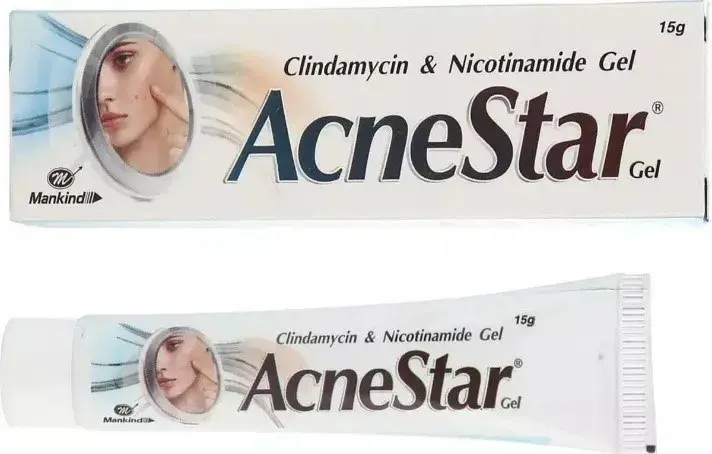
Mankind Consumer Products Private Limited is the proprietor of the word mark ACNESTAR, registered in Class 5 under Registration No. 1352577 with effect from 25 April 2005. The mark was originally registered in the name of Lifestar Pharma Pvt. Ltd., which was later amalgamated with Mankind Pharma Ltd. Mankind Pharma Ltd. assigned the mark to the plaintiff.
The mark has been used since 2005 for a clindamycin and nicotinamide gel, as well as for soaps and face washes. According to the auditor’s certificate relied on by the plaintiff, sales under the ACNESTAR mark since inception amounted to about ₹540 crore, including ₹76.39 crore in the financial year 2024–25.
The plaintiff’s case was that two decades of continuous use had established substantial goodwill, and that the mark had come to be exclusively associated with it.
The defendants’ product
The dispute arose when Alaina Healthcare Private Limited (Defendant No. 1, the manufacturer) and A. Menarini India Private Limited (Defendant No. 2, the marketer and part of the A. Menarini group) sold a serum for acne scars under the name HEXILAK ACNE + SCAR.
Mankind alleged that ACNE + SCAR was nearly identical to its registered mark ACNESTAR. In its submission, the only change was the replacement of the letter “T” with “C”, a minute change calculated to distinguish the marks only superficially.
The dispute also had a directly relevant precedent. In Mankind Pharma Limited v. Brinton Pharmaceuticals Limited, a Division Bench of the Delhi High Court had restrained a third party from using ACNESCAR, holding it to be phonetically nearly identical to ACNESTAR.[2] Although that judgment was later corrected on review to clarify that its observations would not bind the trial court at the final hearing of that suit, the Court held that the principles it laid down on these very marks continued to bind it.[3]
Having learnt of the impugned product on 17 February 2026, the plaintiff instituted the present suit on 11 March 2026. An ex parte ad interim injunction was granted on 20 March 2026. When Defendant No. 2 challenged it before the Division Bench, the injunction was kept in abeyance, on the plaintiff’s own statement, until the application was decided afresh after considering the defendants’ reply.[4]
The defence
Defendant No. 2, which alone filed a reply and contested the application, raised several objections. It alleged that the plaintiff had concealed the true date on which the product entered the market, asserting that sales had begun in August 2022. It also invoked Sections 30(2)(a) and 35 of the Trade Marks Act, 1999, contending that “ACNE” and “SCAR” were ordinary dictionary words describing the intended purpose of the product.[5]
Further, it argued that its registered mark HEXILAK and the house mark MENARINI sufficiently distinguished its product from ACNESTAR, eliminating any real likelihood of confusion.
The central question before the Court was therefore not whether the defendants could use the ordinary words “acne” or “scar”, but whether their use of ACNE + SCAR as a product identifier could be defended against the plaintiff’s infringement claim.
The competing marks at a glance
 |
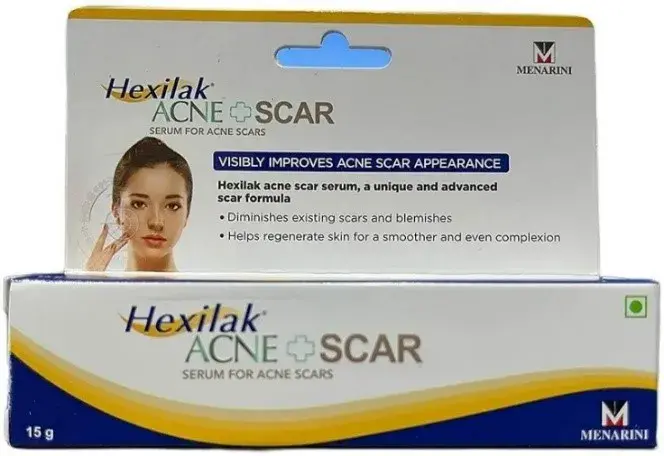 |
| Figure 1: Plaintiff’s registered mark, ACNESTAR | Figure 2: Defendants’ impugned mark, HEXILAK ACNE + SCAR |
The Court compared the rival marks for their structure, pronunciation and use, and the circumstances in which consumers encounter the products.
The Court’s Reasoning: Five Key Principles
- Concealment and delay did not defeat the claim
Defendant No. 2 argued that the plaintiff had failed to disclose when the product’s sales actually began. The plaint stated that the defendants had been marketing the product since May 2025, although a Flipkart listing filed by the plaintiff itself carried a review dating back to May 2024.The Court declined to treat this discrepancy as a ground to deny relief at the threshold. Because the plaintiff had itself placed the relevant document on record, the error was treated as inadvertent rather than deliberate concealment. The inaccuracy was relevant to delay and the balance of convenience, but not to the question of infringement.[6]The Court also rejected the contention that delay should defeat the application. Delay is not, by itself, a ground to refuse an injunction against infringement, and there was no material showing that the plaintiff knew of the product earlier and acquiesced in its use.[7]The distinction is important. Delay and concealment may be relevant when a court exercises its discretion to grant interim relief, but neither automatically extinguishes the rights arising from a subsisting trade mark registration. The materiality of the alleged suppression and the evidence of acquiescence must be assessed in context. - Descriptive words do not make every composite mark descriptive
The reliance on Sections 30(2)(a) and 35 raised a familiar question: can a trader use words that describe the nature or intended purpose of a product without infringing another trader’s registered mark?The Court distinguished between the ordinary descriptive use of words and their adoption as a product name.Mankind did not claim exclusive rights over the word “ACNE” in isolation; it is settled that the name of an ailment cannot be appropriated by any one trader in the drug trade. Its claim concerned the mark ACNESTAR as a whole. Relying on Brinton, the Court held that ACNESTAR could not, at the interim stage, be regarded as descriptive merely because it incorporated the word “ACNE”. Its subsisting registration was also prima facie evidence of validity.[8]The Court then examined how ACNE + SCAR was actually used. It appeared on the packaging as the name of the product, while the words “SERUM FOR ACNE SCARS”, printed separately and in smaller letters, provided the description. The product permission and online listings likewise referred to the product as “Hexilak Acne Scar Serum” or “Hexilak Acne Plus Scar Serum”, and the defendant’s invoices described it as “Hexilak Acne 15gm”.This distinction proved significant. The expression was not merely being used in a sentence to explain the product’s purpose; it was being used to identify the product itself.[9]The Court also noted Defendant No. 2’s own position that its serum does not treat acne and is meant only for the scars left behind. Read as it appears on the pack, ACNE + SCAR would therefore hardly be an accurate description of the product.
The decision does not prevent traders from using ordinary language to describe their products. The Court expressly clarified that the defendants remain free to describe their product, in the ordinary descriptive sense, as a serum for acne scars. What it restrained was the use of the impugned expression as a mark, pending final adjudication.
- Adding a house mark does not cure deceptive similarity
Defendant No. 2 also argued that the presence of HEXILAK and MENARINI distinguished its product from ACNESTAR.The Court rejected this defence, applying the principle laid down by the Supreme Court in Kaviraj Pandit Durga Dutt Sharma v. Navaratna Pharmaceutical Laboratories: once the essential features of a registered mark have been adopted, differences in get-up, packaging or other added matter are immaterial in an action for infringement.[10]On the pack, ACNE + SCAR appeared immediately below HEXILAK, in larger letters than HEXILAK itself, and was the most prominent text. Since Defendant No. 2 used HEXILAK for a range of scar products, ACNE + SCAR identified this particular product within that range. Its use was therefore in the nature of sub-branding, which is not recognised as a defence to infringement.[11]Nor could the comparison be reduced to ACNESTAR versus HEXILAK by discounting the allegedly descriptive words. Marks must be compared as a whole, and so compared, ACNESTAR and ACNE + SCAR yielded near identity, not merely a common prefix.[12]The broader lesson is that a recognisable corporate brand cannot automatically neutralise the infringing effect of a secondary product identifier. The assessment turns on the role and prominence of the disputed expression, not merely on whether another mark appears on the packaging. - A single-letter difference may be insufficient to distinguish competing marks
The comparison between ACNESTAR and ACNE + SCAR was central to the Court’s reasoning.What the rival marks share is not merely the word ACNE but the entire structure A-C-N-E-S-_-A-R, differing by a single letter at the sixth position. Following Brinton, the Court found the two phonetically nearly indistinguishable. The “+” device between ACNE and SCAR did not alter the position, since a purchaser asking for the product does not pronounce it.Trademarks are not assessed through a meticulous, side-by-side examination by a consumer with perfect recall. An unwary purchaser of average intelligence and imperfect recollection goes by the overall structural and phonetic similarity of the marks, and does not split a name into its component parts.[13]This principle assumes particular importance where the competing products are purchased through the same channels. A consumer may remember the broad sound or structure of a brand without recalling every letter or typographical detail.The ruling therefore reinforces the point made in Brinton: minor spelling variations do not create a commercially meaningful distinction when the overall phonetic and structural resemblance remains pronounced. - The nature of the products and public interest matter
The Court attached particular significance to the products’ overlapping consumers and trade channels.ACNESTAR gel is a clindamycin and nicotinamide preparation and a Schedule H drug, while the defendants’ product is a serum for acne scars made under a cosmetics licence. Although the products differ in nature and regulatory classification, both are directed at consumers with acne and related skin conditions, and both are sold through chemists and the same online platforms. The plaintiff itself also sells cosmetic products, namely soaps and face washes, under ACNESTAR. Following Brinton, the Court held that the medicinal character of one product and the non-medicinal character of the other made no difference.[14]Relying on Cadila Health Care Ltd. v. Cadila Pharmaceuticals Ltd. and Glenmark Pharmaceuticals Ltd. v. Sun Pharma Laboratories Ltd., the Court applied a stricter standard to confusion involving medicinal products.[15]The reasoning was not that a cosmetic serum and a prescription medicine are identical goods. Rather, their differences did not eliminate the risk of confusion where the products cater to overlapping consumers and are available through common channels. Given the near phonetic identity of the marks, the possibility of a consumer, or even a chemist, applying one product for the other could not be ruled out.The public-interest dimension is important. In the pharmaceutical and skincare sectors, brand confusion may affect not only commercial goodwill but also consumer choice and confidence in product identity. A careful assessment of similarity is therefore warranted even when the competing goods are not identical.
The Operative Order: What the Injunction Does and Does Not Prohibit
Having considered the rival submissions, the Court found a prima facie case of infringement under Section 29(2)(b) of the Trade Marks Act, 1999.[16] It also concluded that the balance of convenience favoured the plaintiff, and that the plaintiff would suffer irreparable injury if the injunction were refused. The fact that the plaintiff’s sales had increased did not negate that injury, which lies in the erosion of the exclusivity conferred by registration.[17]
The Court took note of the fact that Defendant No. 2 had been selling the product since 2022. However, the plaintiff had been the registered proprietor of ACNESTAR since 2005, with sales of about ₹540 crore, while Defendant No. 2 had neither a registration nor an application for the impugned mark.
The injunction restrains the defendants, until final adjudication of the suit, from manufacturing, selling, offering for sale, advertising or otherwise dealing in pharmaceutical or medicinal preparations, skin care preparations, or any allied or cognate goods under ACNE SCAR, ACNE + SCAR, ACNESCAR or any other deceptively similar mark.[18]
However, the relief is targeted rather than absolute.
- HEXILAK and MENARINI may continue to be used: The injunction does not affect the defendants’ use of these marks.
- The product may continue to be sold under a different name: The order does not prohibit the sale of the serum itself; it only requires a different product name.
- Existing stock may be recalled within two months: The Court allowed Defendant No. 2 two months to recall stock from distributors, stockists, retailers and e-commerce sellers, and to have online listings under the impugned mark withdrawn.
- The recall period is not a licence for continued use: The injunction operates forthwith, and the two-month period does not permit the defendants to manufacture, advertise, offer for sale or supply any product under the impugned mark.
The order thus protects the plaintiff’s registered trade mark while allowing the defendants to continue their business under a different product name.
Importantly, the injunction remains interlocutory. The Court’s findings are prima facie, made for the purpose of deciding the interim application, and do not amount to an expression on the merits of the suit.
Key Takeaways for Brand Owners and Legal Practitioners
- A house mark is not an automatic defence. corporate or umbrella brand to a disputed product name may not avoid infringement if the secondary identifier itself is deceptively similar to a competitor’s registered mark.
- Minor spelling changes may not be enough.
Replacing a single letter or inserting a symbol will not necessarily distinguish two marks when their overall visual, structural and phonetic impressions remain substantially similar. - Descriptive use must be distinguished from branding.
Sections 30(2)(a) and 35 protect genuine descriptive use; they do not authorise the adoption of descriptive-sounding words as a product name that infringes an existing registration. - Packaging and marketplace listings matter.
The prominence of a disputed expression, its placement alongside a house mark, and the way it appears in invoices, product permissions and online listings can all help establish whether it functions as a trade mark or merely describes the goods. - Clearance searches should extend beyond exact matches.
Brand owners should assess phonetic and structural similarities, including marks that differ by only one letter or a minor typographical element. A search that focuses solely on exact spelling may overlook material infringement risks. - Pharmaceutical and skincare brands require particular care.
Where products target overlapping consumers and move through common retail channels, differences in formulation or regulatory classification may not eliminate the risk of confusion. Naming decisions should account for the commercial context in which consumers encounter the marks.
Conclusion: Protecting Brand Identity Without Monopolising Ordinary Language
Mankind Consumer Products v. Alaina Healthcare illustrates the distinction between protecting a registered trade mark and monopolising the ordinary language used to describe a product.
The Court did not prevent traders from referring to acne or scars in a genuinely descriptive manner. Instead, it focused on the defendants’ use of ACNE + SCAR as a prominent product identifier, its near identity with ACNESTAR, the overlapping trade channels and the potential for consumer confusion.
The ruling also shows why the legal assessment cannot be confined to a single letter, an added house mark or a narrow comparison of isolated words. Trade marks operate in the marketplace, where consumers rely on imperfect recollection and encounter products in real-world purchasing conditions.
For brand owners, the message is clear: a product name must be assessed not only for what it describes, but also for the commercial impression it creates. For legal practitioners, the case is a useful reminder that the distinction between descriptive language and trade mark use depends on context, presentation and function.
Ultimately, commercial competition permits businesses to describe their products in ordinary language. It does not permit them to adopt a product identifier that so closely resembles a rival’s established mark that confusion becomes a real possibility.
Aysha Sasmin , Intern at S.S. Rana & Co. has assisted in the research of this article.
[1] Mankind Consumer Products Pvt. Ltd. v. Alaina Healthcare Pvt. Ltd. & Anr., CS(COMM) 280/2026, I.A. 7346/2026, 2026:DHC:9367 (Del HC, judgment dated 16 October 2026).
[2] Mankind Pharma Ltd. v. Brinton Pharmaceuticals Ltd., FAO (COMM) 166/2024 (Del HC, DB, decided 22 September 2025).
[3] Review Pet. 514/2025 in FAO (COMM) 166/2024 (Del HC, DB, order dated 17 February 2026).
[4] FAO (OS) (COMM) 107/2026 (Del HC, DB, order dated 24 April 2026).
[5] Trade Marks Act, 1999, ss. 30(2)(a) and 35.
[6]ANZ Grindlays Bank Plc v. Commissioner, MCD, 1995 SCC OnLine Del 376; Arunima Baruah v. Union of India, (2007) 6 SCC 120.
[7] Midas Hygiene Industries (P) Ltd. v. Sudhir Bhatia, (2004) 3 SCC 90; Ansul Industries v. Shiva Tobacco Co., 2007 SCC OnLine Del 74.
[8] Brinton, para 41.4; Trade Marks Act, 1999, s. 31(1).
[9] Contrast Marico Ltd. v. Agro Tech Foods Ltd., 2010 SCC OnLine Del 3806, where “low absorb” was used only within the phrase “WITH LOW ABSORB TECHNOLOGY”.
[10] Kaviraj Pandit Durga Dutt Sharma v. Navaratna Pharmaceutical Laboratories, AIR 1965 SC 980, para 28.
[11] V-Guard Industries Ltd. v. Crompton Greaves Consumer Electricals Ltd., 2022 SCC OnLine Del 1593, affirmed in Crompton Greaves Consumer Electricals Ltd. v. V-Guard Industries Ltd., 2024 SCC OnLine Del 1838.
[12] Pernod Ricard India (P) Ltd. v. Karanveer Singh Chhabra, 2025 SCC OnLine SC 1701.
[13] Amritdhara Pharmacy v. Satya Deo Gupta, 1962 SCC OnLine SC 13.
[14] Brinton, paras 42.2 and 42.8; Himalaya Wellness Co. v. Wipro Enterprises (P) Ltd., (2023) 3 HCC (Del) 755, affirmed in Wipro Enterprises (P) Ltd. v. Himalaya Wellness Co., 2024 SCC OnLine Del 6859.
[15] Cadila Health Care Ltd. v. Cadila Pharmaceuticals Ltd., (2001) 5 SCC 73; Glenmark Pharmaceuticals Ltd. v. Sun Pharma Laboratories Ltd., 2024 SCC OnLine Del 2707.
[16] Trade Marks Act, 1999, s. 29(2)(b).
[17] Trade Marks Act, 1999, s. 28(1).
[18] Mankind Consumer Products, paras 62–63.