







Foreign Filing License (FFL) for Patents: A Comprehensive Guide for Indian Residents, Startups, MSMEs, and International Clients
Understanding the Foreign Filing License (FFL) for Patents in India
A Foreign Filing License (FFL) is an essential regulatory requirement under Section 39 of the Indian Patents Act, 1970, that governs how Indian residents file patents abroad. Specifically, if an inventor residing in India intends to file a patent in a foreign country before filing in India, they must first obtain permission from the Indian Patent Office (IPO).
What is the Purpose of a Foreign Filing License (FFL)?
The FFL ensures that India’s national security interests are safeguarded before sensitive technologies are disclosed to foreign jurisdictions. It is a formal permission granted by the Indian Patent Office, allowing Indian residents to file patent applications in foreign countries. This provision aims to prevent the disclosure of defense-related or strategic technologies without prior approval.
Indian residents, including startups, MSMEs, and established businesses, must navigate this process to avoid severe legal consequences. Understanding the need for an FFL and adhering to the filing requirements is crucial for any company aiming to protect their intellectual property (IP) abroad.
Key Benefits of Obtaining a Foreign Filing License (FFL) in India
The Foreign Filing License offers multiple benefits, particularly for innovative startups and MSMEs with international market aspirations. Here are some of the key advantages:
- Global Market Access: With the FFL in hand, inventors and companies based in India can file patents directly in foreign countries, such as the US, without first filing in India. This allows businesses to expand globally and protect their IP in markets with higher demand.
- Increased IP Flexibility: In cases where the invention has limited or no commercial potential in India, the FFL allows direct filing abroad, ensuring your intellectual property is well-protected internationally.
- Risk Mitigation: By obtaining the FFL, companies can avoid the legal repercussions of filing abroad without permission, which could lead to fines, penalties, or even the revocation of the patent.
When Is a Foreign Filing License Required?
As per the provisions of the Indian Patents Act, 1970, the following conditions require the Indian inventor to obtain a Foreign Filing License:
- Direct Foreign Filing: If an Indian resident wishes to file a patent application in a foreign country without first filing in India.
- Sensitive Technologies: Technologies that fall under categories such as defense, atomic energy, or national security require additional scrutiny before being disclosed internationally.
- Timing: If a patent application has been filed in India, and a subsequent application is to be made in a foreign country, the FFL must be obtained within six weeks from the date of filing the Indian patent.
The Process of Obtaining a Foreign Filing License (FFL)
To request a Foreign Filing License, the following steps must be undertaken:
- Submission of Form 25: The inventor or company must submit Form 25 to the Indian Patent Office, detailing the invention and the countries where the patent is intended to be filed.
- Disclosure of Invention Details: The application must include full disclosure of the invention, including the technical specifications, reasons for seeking protection abroad, and the specific countries in which the patent will be filed.
- Timeline for Approval: Upon submission, the Indian Patent Office typically processes the request within 21 days (except in cases related to defense or atomic energy). If the application is deemed sensitive, the approval may be delayed, or denied.
Rule 71 (2) of the Indian Patents Act provides that the Controller ordinarily disposes of the request (except in case of inventions relating to defense and atomic energy applications) within a period of twenty one days from the date of filing of such request.
- Required Documents: These include:
- Form 25 for permission.
- Power of Attorney from the inventor if a patent agent is appointed.
- Details of the inventor(s) and their residence.
- Assignee information if applicable.
- Countries where the patent will be filed, along with justification.
- Disclosure of the invention, along with the Foreign Filing License (FFL) form
- Form 28– In case the applicant is a Small Entity.
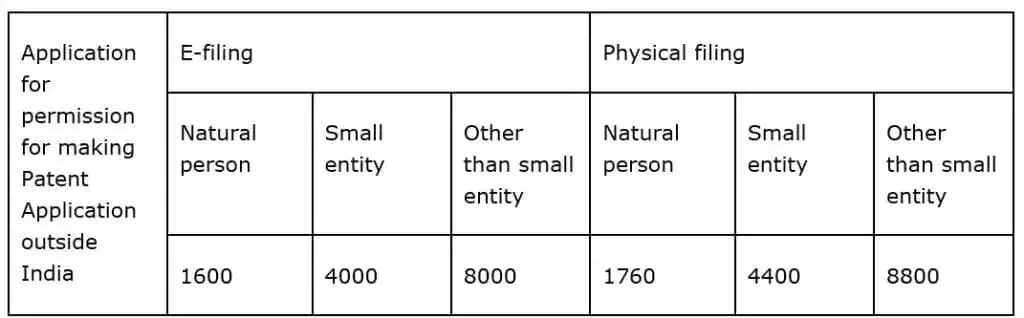
- Fee Payment: Filing Form 25 incurs a fee, which must be paid as per the IPO’s fee schedule.
Potential Consequences for Non-Compliance
Failing to secure an FFL can result in severe legal consequences. Under Section 118 of the Indian Patents Act, a breach of these provisions can lead to penalties, including imprisonment for up to two years or a fine, or both. Additionally, any non-compliance may result in the abandonment of the patent application or the revocation of an already granted patent, as per Section 40.
Section 118 of the Indian Patents Act of 1970 states that if the patent applicant (Indian resident) fails to comply with the clauses of Section 39, “he shall be punishable with imprisonment for a term which may extend to two years, or with fine, or with both.” Additionally, as stated in Section 40, failure to obtain prior authorization or a written permit for foreign filing from the IPO may lead to “the application for patent under this Act shall be deemed to have been abandoned and the patent granted, if any, shall be deemed to be revoked under Section 64 (1)(n)’’
Statutory Provisions Under Section 39 of the Indian Patents Act, 1970
- Section 39 prohibits Indian residents from filing patent applications in foreign countries without first obtaining written permission from the Indian Patent Office.
- The Controller of Patents must approve the request unless the invention relates to sensitive areas like defense or atomic energy.
- If permission is not granted, the applicant cannot proceed with their international filing until the issue is resolved.
Why Is a Foreign Filing License Important for Startups and MSMEs?
For startups and MSMEs looking to expand their footprint internationally, securing a Foreign Filing License is a crucial step in protecting their innovations and ensuring they can safely file patents in key global markets without violating Indian patent laws. A seamless FFL process ensures that companies can:
- Safeguard their intellectual property abroad, fostering trust with potential foreign clients and partners.
- Protect their inventions from being exposed to foreign competitors prematurely.
- Maintain compliance with Indian regulations, avoiding costly penalties or invalidation of patents.
Conclusion: Ensuring Compliance and Global IP Protection
The process of obtaining a Foreign Filing License is straightforward but essential for any Indian resident seeking to file a patent in a foreign country. For startups, MSMEs, and international clients, understanding the statutory requirements and ensuring proper compliance with the Indian Patents Act, 1970 is crucial for global business expansion and IP security.