








Patent Annuity & Patent Renewal in India
India is one of the fastest-growing innovation ecosystems globally. For startups, MSMEs, technology companies, research institutions, and foreign patent holders, maintaining patent protection in India is a critical component of long-term IP strategy.
This comprehensive guide explains Patent Renewal (Patent Annuity) in India, statutory timelines, compliance requirements, and strategic considerations for domestic and international businesses.
1. Patent Term in India – Legal Framework
Under the Indian Patents Act, 1970, a patent is granted for a term of 20 years from:
- The filing date of an ordinary application, or
- The filing date of a convention application
For applications entering India via the Patent Cooperation Treaty (PCT) route, the 20-year term is calculated from the International Filing Date.
To maintain enforceability throughout this term, annual renewal fees (annuities) must be paid in accordance with statutory timelines.
2. What is Patent Renewal (Patent Annuity) in India?
Patent renewal, also referred to as patent annuity payment in India is the statutory fee payable to keep a granted patent in force.
Under Section 53 read with Rule 80:
- Renewal fees are payable from the 3rd year onwards
- Fees must be paid before the expiration of the relevant patent year
- A grace period of up to six months is available upon payment of prescribed surcharge
Failure to comply may result in patent lapse, affecting enforceability and commercialization rights.
3. Annual Patent Renewal Timeline (India)
Standard Renewal Structure
- Renewal for the 3rd year must be paid before the expiry of the 2nd year from filing
- Thereafter, each year’s renewal must be paid in advance
- Example: Renewal for the 5th year must be paid before expiry of the 4th year
This structure is particularly important for:
- Seed-funded and Series A startups managing IP budgets
- MSMEs aligning patent costs with product commercialization
- Foreign applicants managing multi-country renewal calendars
4. Renewal Fees When Patent is Granted After Two Years
Where a patent is granted more than two years after filing:
- Accrued renewal fees that became due during pendency must be paid
- Payment must be made within three months from the date of recording of grant in the Register of Patents
- Extension may be available up to nine months from such recording, subject to prescribed procedure
An extension request under Section 142(4) must be filed in the prescribed form with official fees.
This provision is particularly relevant for:
- Deep-tech startups with long examination timelines
- Universities and R&D institutions
- International applicants entering India via PCT
5. Advance Payment of Patent Renewal Fees
Indian patent law permits payment of renewal fees for two or more years in advance.
Strategic advantages include:
- Long-term IP portfolio planning
- Budget predictability for MSMEs
- Reduced administrative oversight for foreign patentees
- Alignment with investor due diligence cycles
Advance annuity management is often integrated into broader IP portfolio management strategies.
6. Compliance Requirements for Renewal Payment
Under Rule 80(2), renewal requests must correctly mention:
- Patent Number
- Date of Grant
- Relevant patent year
Accurate documentation is essential to avoid procedural defects that may impact patent validity.
For international businesses, coordination with local Indian patent counsel ensures regulatory compliance with the Indian Patent Office.
7. Patent of Addition – Renewal Implications
In the case of a Patent of Addition:
- No separate renewal fee is payable as long as the main (parent) patent remains in force
- If the Patent of Addition becomes independent, renewal fees become payable as if originally granted independently
This distinction is significant for:
- Product improvement patents
- Iterative technology innovations
- Hardware and biotech advancements
Strategic Importance of Patent Renewal for Startups & MSMEs
Timely patent renewal in India supports:
- Protection of core technology assets
- Licensing and cross-border commercialization
- Investor confidence and valuation
- M&A and due diligence readiness
- Enforcement against infringement in the Indian market
For startups and MSMEs, a structured patent annuity compliance strategy can prevent unintended lapses that may undermine competitive advantage.
For foreign corporations, India remains a priority jurisdiction within Asia for:
- Manufacturing
- Technology deployment
- Pharmaceutical and biotech protection
- Software-enabled innovation
Maintaining patent validity in India strengthens global IP positioning.
Why Patent Renewal Compliance Requires Strategic Oversight
Patent annuity management is not merely administrative. It intersects with:
- Business expansion planning
- Regulatory compliance
- Litigation preparedness
- IP monetization strategies
A coordinated approach integrating prosecution, maintenance, and enforcement ensures uninterrupted patent protection throughout the 20-year term.
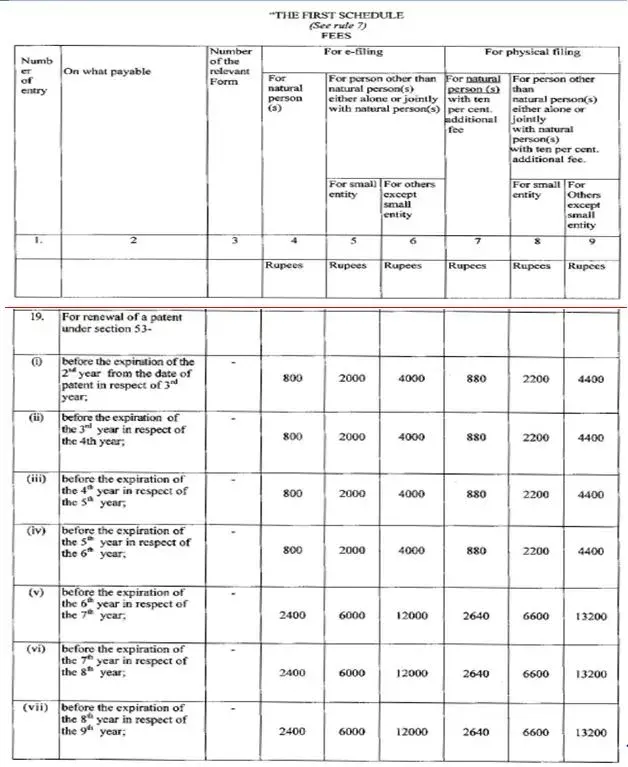
For further information on patent filing fees, forms and annuity fees for patents in India, please access the link: Patent Forms and Fees
To Know More about Patents in India click on the link below:
https://ssrana.in/ip-laws/patents/patent-application-filing-india/
https://ssrana.in/ufaqs/what-is-patent-applications-filing-process-in-india/
https://ssrana.in/articles/protecting-and-monetizing-innovation/